
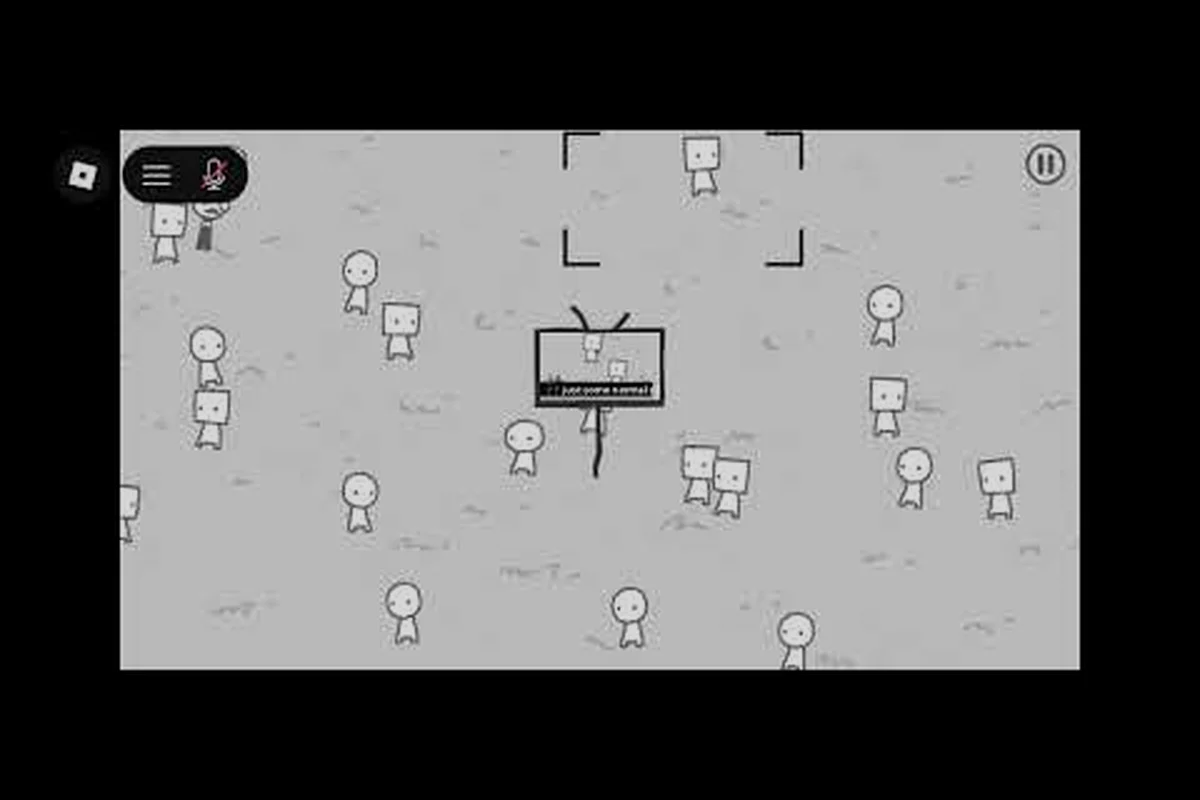
Say Cheese Roblox YouTube coverage can help you understand the game’s media-themed premise, but it is not an official source. Learn how to separate footage, commentary, search-driven titles, and community claims before treating any video as documentation.
Who Is Actually Making Say Cheese! Videos
The first question is not whether a channel posted about Say Cheese! Roblox, but whether the channel has any verifiable connection to the game’s creator. As of 2026-10-31, Mechanical Boy LLC—the creator group listed for the experience—has not linked a public YouTube channel, website, Discord server, social account, or announcement feed. That means an ordinary gameplay upload is third-party coverage, even when it looks polished or presents itself as a definitive guide.
The distinction matters because “Say Cheese! Roblox YouTube” describes a topic, not an official partnership. A creator named in a thumbnail does not become an official representative merely because the title uses an authoritative word such as “complete” or “definitive.” Search results can also mix official Roblox pages, third-party videos, fan accounts, and unrelated content, so the visible source label deserves attention before playback.
The authoritative starting point is Say Cheese!'s official Roblox listing. Its publisher description frames the player as a journalist hired by “Big Media,” sent to a park to spread chaos and panic while a large audience watches the news. It also establishes the central choice: preserve a peaceful society or change fate to bring hope. These are official premises; a video may interpret them, but only the page supports them as stated facts.
Official publisher versus independent coverage
When checking Say Cheese Roblox YouTube content, separate claims about the game from claims about the creators themselves: an official Roblox game page or creator group can verify the experience’s identity and update history, while an independent Say Cheese Roblox gameplay upload may reveal what a player actually sees. A commentary-only video or fan wiki should be treated as interpretation until its claims are traced to official information.
| Channel type | What they offer | Reliability |
|---|---|---|
| Official Roblox game page | Publisher description, experience identity, update information, and visible engagement data | High for officially published facts |
| Official creator group page | Creator identity and public group information | High for confirming who made the experience |
| Independent gameplay upload | Original footage and the creator’s personal interpretation | Useful primary observation; interpretation remains subjective |
| Commentary-only video | Reactions, comparisons, or claims based on another source | Depends on whether claims can be traced and verified |
| Fan page or fan wiki | Community notes, art discussion, and player interpretation | Useful for discovering perspectives, not for replacing official documentation |
The important distinction is between provenance and quality. A first-time streamer may show something accurately even without an official label. Conversely, a creator with an established audience can make an unsupported claim. Provenance tells you where information came from; quality tells you whether the evidence supports it.
What the creator identity establishes
The official page identifies the experience as 📸 Say Cheese! [STORY], created by Mechanical Boy LLC. The experience launched on October 19, 2026 and was updated on October 31, 2026. The creator group had 4,810 members as of 2026-10-31, while the game itself recorded 3,955,237 visits, 13,403 players playing, and 49,747 favorites as of the same date. It also displayed 12,154 likes and 1,369 dislikes, roughly a 90% positive rating, as of 2026-10-31.
Those figures describe attention and reception, not the reliability of any Say Cheese Roblox videos. A large audience can amplify both useful discoveries and careless retellings. If you need a broader account of what the game depicts, the Say Cheese! story and atmosphere overview can provide context, but it should still be checked against the actual experience.
Why Titles Overpromise
YouTube titles are compact search promises, not neutral summaries. Say Cheese Roblox videos often compete for attention with phrases that sound comprehensive, urgent, or definitive. Those words can be useful for discovering the subject, yet they should not be interpreted as evidence that the video covers everything or that every headline claim has been confirmed.
Community videos (as of 2026-10-31) discuss multiple endings; the creator has not published a list, a count or any ending names, so treat them as unconfirmed. That sentence matters because it exposes a basic source problem. A creator may know something from direct play, but a search title still needs corroboration before the claim becomes reliable information for everyone else.
Common title patterns and better reading habits
| Pattern | What it implies | Reality check |
|---|---|---|
| “Every ending” | The video identifies and proves the full range of possible outcomes | The creator has not published a count or names; treat the claim as unconfirmed |
| “Complete guide” | Every relevant detail is covered | Check whether the upload defines “complete” and separates observation from opinion |
| “You need to know” | The viewer will miss essential information | Identify the specific advice and test it against the current game |
| “Secret” or “hidden” | The creator found something not stated elsewhere | Ask whether the footage proves the claim or merely implies it |
| “New” or “latest” | The information is current | Compare the upload date with the official update date |
| “100% accurate” | The creator has authoritative confirmation | Ask who confirmed it and where that evidence appears |
A title creates a hypothesis, not a conclusion. Before pressing play, rewrite it into a testable statement: “This creator claims to show every outcome, but no official list currently confirms that scope.” This small change keeps attention on evidence and prevents the thumbnail from quietly becoming the source.
Dates matter more than urgency
Say Cheese! was released recently relative to the research snapshot, so older videos can become outdated while newer ones may rely on community reports rather than direct observation. The official page’s last-updated date gives a useful checkpoint. If a video was uploaded before the current build and does not explain differences, verify what it is demonstrating in the present version.
Also distinguish the upload date from the recording date. Edited footage may come from an earlier session, and a creator can discuss a recent update without showing it directly. The useful question is not simply “Is this video new?” but “Does the footage or statement match the current official page and the version I am about to play?”
Separating Footage From Commentary
A gameplay recording can support observations, but interpretation often arrives through editing. The same scene can be framed as evidence of one mechanic, a joke, or a moral lesson. Say Cheese Roblox YouTube viewers should identify the source of every major claim before deciding whether it is visible, stated, or inferred.
Visible evidence appears on the screen. Spoken observation is what a creator says while the footage plays. External claim comes from community experience, another video, or general knowledge. Interpretation assigns meaning to any of these. Only the first category is automatically visible to the audience, and even visible evidence may lack enough context to prove a broader conclusion.
A claim-tracing method
Watch a clip once without sound and note what actually happens. Then replay it with sound and record the creator’s explanation. Finally, ask whether the narration adds information or simply labels what is visible. This three-pass approach reduces the chance of borrowing confidence from a confident voice.
For example, a camera-themed line in the official description supports the idea that the experience uses a camera motif. It does not automatically prove any specific operation described in a video. If a creator interprets a visual detail as proof of a broader system, that remains an interpretation unless the official page documents it or repeated in-game evidence supports the connection.
What can and cannot be established
| Evidence type | Reasonable conclusion | Avoidable leap |
|---|---|---|
| Direct current footage | What appears during the shown session | Assuming every session behaves identically |
| On-screen text | The displayed wording and context | Treating a cropped line as a complete system description |
| Creator narration | The creator’s claim or interpretation | Assuming confidence equals verification |
| Official game-page text | The publisher’s documented premise | Assuming downstream videos copy that wording accurately |
| Fan discussion | Community reports (as of 2026-10-31) | Presenting reports as developer confirmation |
| Comment reply | A replyer’s experience or opinion | Treating it as official clarification |
This framework is especially helpful for Say Cheese Roblox streamers who want to avoid repeating unverified claims. If a point is not documented, say that directly. If players report it, date the report. If you need to resolve the point, check in game and describe the result without pretending the developer has confirmed it.
Commentary can still add value
Criticism should not be confused with dismissal. Commentary may highlight pacing, atmosphere, presentation, or the emotional effect of the official premise. It may also help viewers compare different approaches. The problem is not opinion itself; it is when an opinion is phrased as a documented fact.
A strong commentator makes the distinction visible: “The official description establishes X; this clip shows Y; my reading is that Z.” That structure gives viewers something useful without laundering interpretation into documentation. For a concise overview of the game’s setup before evaluating a longer upload, the short Say Cheese! walkthrough can serve as a quick reference.
A Viewer’s Verification Checklist
Verification does not require frame-by-frame forensic analysis. It requires a consistent order of operations: identify the source, date the evidence, isolate the claim, and test uncertain details in game. That routine is more reliable than judging a video by its production quality or the size of its audience.
The seven-point viewing routine
- Confirm the video is specifically about the Roblox experience, not a similarly named game.
- Identify whether the channel is the official creator or an independent creator.
- Check the upload date against the official page’s update information.
- Separate visible events from narration and interpretation.
- Trace broader claims to an official source or repeated in-game evidence.
- Look for transparent conditions, including whether footage was edited or captured on another version.
- Record what remains uncertain instead of filling the gap with certainty.
This checklist works even when a channel is entertaining. It also works when a video is careful: there is no need to reject strong presentation or reject a creator because they are not the publisher. The goal is to calibrate trust rather than eliminate it.
Evidence strength by source
| Check | Why | Action |
|---|---|---|
| Official page identity | Confirms the experience and publisher | Compare the page title and creator details |
| Upload date | Establishes temporal relevance | Check whether the game was updated afterward |
| Visible footage | Shows what occurred in one session | Watch without relying on the narration first |
| Narration context | Reveals interpretation and assumptions | Mark claims separately from visual events |
| Repeated behavior | Strengthens an uncertain observation | Test more than once in game |
| Creator response | May clarify a point, but may still be unofficial | Note who answered and when |
Use a simple claim ledger while watching: one column for the video’s statement, one for the visible or documented evidence, and one for your confidence. This creates useful discipline without pretending that a short upload must contain everything. It also prevents a vivid scene from silently becoming a universal rule.
When the official source does not answer the question
Sometimes there is no official explanation for a detail. The correct response is not to borrow another creator’s confidence. Write that the official page does not document the detail, label relevant anecdotes as community reports (as of 2026-10-31), or check in game for your own result.
That wording may feel less exciting than a definitive headline, but it is substantially more honest. For example, if a Say Cheese Roblox YouTube video attributes a particular in-game result to a specific moment, the description should separate what the official source documents from what the uploader merely claims. A concrete test is to name the missing evidence—official event rules, a repeatable in-game result, or a dated clip—and explain what would confirm it. This makes the Say Cheese Roblox video reusable for viewers checking fan wiki pages, community reports, or later creator comparisons without turning an unverified anecdote into fact.
Using Videos Without Absorbing Errors
Video coverage works best as a map, not a manual. It can show the official premise in motion, demonstrate how decisions feel, reveal presentation choices, and point viewers toward questions worth investigating. The viewer still has to decide which observations deserve reuse and which claims need qualification.
Begin with a question. Are you trying to understand the media-and-society theme, compare how the story feels, locate a specific scene, or learn whether a community claim is supported? The Say Cheese! wiki-style overview can organize basic context, while a video should be treated as one perspective within that context.
Build a source hierarchy
| Source role | Best use | Appropriate confidence |
|---|---|---|
| Official game page | Premise, identity, dates, visible public information | Primary for documented facts |
| Current direct gameplay | Behavior shown during your session | High for the observed situation |
| Independent video | Demonstrations, interpretation, and presentation | Medium until checked |
| Fan wiki or fan art discussion | Community context and creative interpretation | Secondary |
| Search-result snippet | Topic discovery and headline wording | Low until the destination is checked |
The hierarchy changes the purpose of the source. A fan artist may provide excellent creative context without documenting the game. A fan wiki may organize community notes while remaining not documented as an official reference. Say Cheese Roblox content creators can be valuable observers, but their observations should be labeled by source and date rather than flattened into a single authority.
Turn viewing into better questions
A useful Say Cheese YouTube video should make your next in-game question more precise. Instead of asking whether a Say Cheese Roblox YouTuber is right about everything, check which part of the claim their footage supports: the streamer’s chat interaction, fan-art interpretation, encounter mechanics, or current game behavior. For example, a clip showing a streamer’s personal reaction may not prove how every player will encounter that Roblox event, so narrow your question to the exact visible detail, scene, or update involved.
-
Does the official page support the premise being discussed?
-
Does the shown footage demonstrate the broad claim or only a moment?
-
Is the creator describing personal experience, community reporting, or documented information?
-
Would the same result appear in the current version?
-
Can I test the uncertain point without relying on the video’s conclusion?
This approach keeps curiosity focused without turning uncertainty into misinformation. A Say Cheese Roblox fan-art video, for example, may show a visible detail accurately while still relying on a creator’s guess about its origin; separating visible evidence from interpretation prevents a dramatic reaction from being mistaken for a documented mechanic. Likewise, a Say Cheese Roblox streamer’s encounter footage can demonstrate one visible setup, scene, or update version without confirming how it always plays out. Comparing each claim against the same standard makes the videos easier to assess and reveals which details still need confirmation in current Say Cheese Roblox gameplay.
Commentary guidelines for the community
If you discuss a Say Cheese Roblox YouTube upload, descriptive titles help other readers understand the evidence. Say “The video shows…” for visible footage, “The creator says…” for narration, and “The official page states…” for publisher information. Use source attribution for reports that cannot be independently confirmed.
For visual community work, creators working on say cheese roblox fan art can add another dimension, but fan art should be labeled as interpretation rather than proof of in-game details. Likewise, a say cheese roblox fan wiki may help locate community terminology, yet the official page remains the proper source for the published premise. The community discussion and player-feedback overview is another place to compare perspectives without treating every anecdote as a settled fact.
Last Sanity Check Before You Trust a Clip
Before reposting a clip, summarizing a video, or recommending it to another player, complete one final pass: compare the YouTuber’s on-screen example with the documented behavior of Say Cheese Roblox, including the pizza-themed stages and collectible choices shown in the footage. A creator may label a route, reward, or hazard as confirmed even when the Say Cheese Roblox wiki only lists it as an undocumented community report; flag that distinction so a fan wiki page, a Say Cheese Roblox YouTuber commentary, and an in-game observation are not presented as equally reliable evidence.
-
Re-read the official page for the relevant documented detail.
-
Confirm the video’s channel identity and upload date. 3. Play the relevant section once with sound and once without it. 4. Label visible facts, creator statements, and community reports separately. 5. Replace uncertain claims with the official page does not document this; check in game.
The takeaway is simple: video is evidence of an experience, not automatically a record of official truth. Say Cheese Roblox YouTube coverage can be entertaining, informative, and visually revealing while still requiring careful reading. By tracing claims to their source and dating every report, viewers can enjoy the videos without letting their framing overwrite what the game itself demonstrates.
Frequently Asked Questions
Is there an official Say Cheese Roblox YouTube channel?
As of 2026-10-31, the creator’s public Roblox presence does not link an official YouTube channel. Channels publishing Say Cheese Roblox videos should therefore be treated as independent community coverage unless the creator later provides a verified channel or directly identifies an account.
Are Say Cheese Roblox streamers official developers of the game?
No. A streamer may be an experienced player, content creator, or enthusiastic viewer, but that does not make the channel part of Mechanical Boy LLC. Official involvement requires a verifiable connection to the creator, not simply a large following or an authoritative presentation style.
Can I trust every claim made in a Say Cheese Roblox YouTube video?
No. Trust should be assigned claim by claim. Direct footage supports only what it visibly shows, narration reports the creator’s interpretation, and community reports remain dated anecdotes. The official page documents the publisher’s premise, while anything else should be labeled as not documented or checked in game.
How should I compare say cheese roblox youtubers and content creators?
Compare their sourcing, current footage, clarity, and willingness to distinguish evidence from opinion. Audience size and thumbnail style do not establish accuracy. A useful channel explains what it observed, dates its information, acknowledges uncertainty, and avoids presenting community claims as developer confirmation.
Where can I find Say Cheese Roblox fan art and fan wiki material?
Community fan art and fan wiki pages can be valuable for aesthetic interpretation and player discussion, but they are not substitutes for official documentation. Verify in-game claims against the official page and label creative or community interpretations according to their actual source.