
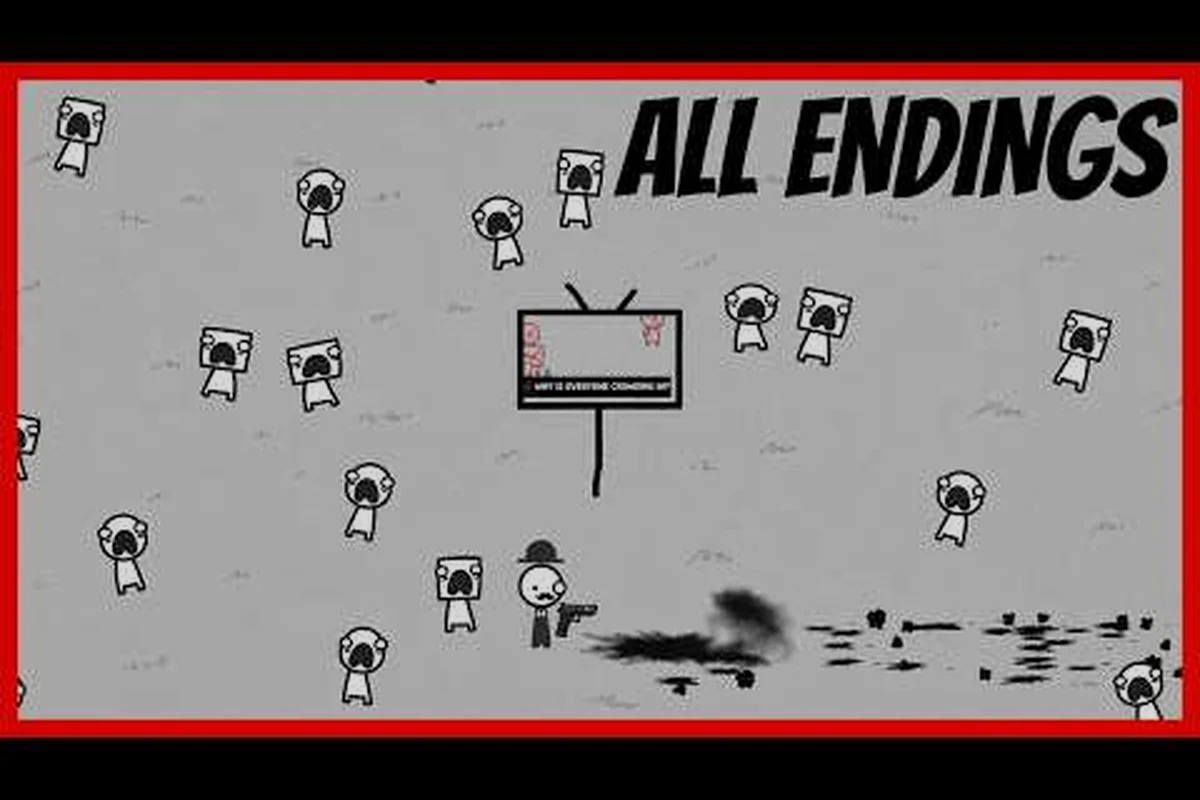
A reliable Say Cheese! Roblox wiki should distinguish published game details from unverified player reports. The official Roblox listing confirms the journalist premise behind Say Cheese!, but its documentation remains thin: it does not clearly explain the full progression system, Story Mode structure, or exact mechanics. That gap makes the place ID especially important for checking whether a claimed experience ID belongs to the intended game rather than an unrelated or unofficial upload, while also preventing fan-made details from being presented as confirmed facts.
Why Say Cheese! Documentation Is Still Thin
Say Cheese! released on October 19, 2026, leaving only twelve days for public documentation to develop by October 31, 2026. This is a very short window for a story-focused Roblox experience, especially when the creator has not published a detailed website, public changelog, or separate official guide. That scarcity explains why fan pages can fill gaps quickly, but it also means those pages should be treated as working notes rather than settled records.
The official listing establishes the core premise: you play as a journalist hired by Big Media, travel to a park, and cause disorder and panic while a large audience follows the news coverage. It frames the central decision as destroying a peaceful society or changing fate to bring hope. Those details provide a useful foundation for a Say Cheese! Roblox story guide, but they do not describe every decision, interaction, scene, or narrative consequence available in the experience. The strongest facts available as of 2026-10-31 come from the Roblox listing, the creator’s group page, and the group owner’s profile. Anything beyond those pages should be checked against the game itself rather than presented as confirmed history.
Which Details the Listing Really Verifies
| Verified item | What the source supports |
|---|---|
| Experience title | 📸 Say Cheese! [STORY] |
| Place ID | 100453542816833 |
| Universe ID | 10771871836 |
| Creator | Mechanical Boy LLC |
| Release date | October 19, 2026 |
| Genre | Adventure / Story |
| Audience setting | Minimal maturity |
| Public server capacity | 12 players |
| Inspiration | The official description credits We Become What We Behold, the browser game by Nicky Case |
| Official developer channel | Roblox listing and creator group page are the verified public channels |
This table matters because official identity data is stable enough to use, while live popularity figures change throughout the day. The listing had 3,955,237 visits, 13,403 players, 49,747 favorites, and 12,154 likes versus 1,369 dislikes as of 2026-10-31. The Mechanical Boy LLC group had 4,810 members as of 2026-10-31. These are snapshots, not permanent totals or evidence of particular features.
The Documentation Gap
A wiki becomes useful when it distinguishes three kinds of statements: direct observations, creator information, and interpretation. Direct observations can include what appears on the official page or what a player personally encounters. Creator information includes posts or materials published by Mechanical Boy LLC. Interpretation covers the meaning a player assigns to a scene, presentation choice, or narrative decision.
The distinction prevents circular sourcing. A community page might say an idea is confirmed because another community page says so, while neither page traces the claim to the creator. By contrast, the official premise can be traced directly to Roblox. The remaining details are not documented on the verified public pages, so the appropriate instruction is to check in game. For readers who want a broader overview of the release rather than a source audit, the Say Cheese! release overview can provide context. The responsible wiki approach still requires checking any specific claim against the sources below.
A Source Hierarchy for a Two-Week-Old Roblox Game
Not every source deserves the same confidence. For a recently released Roblox story game, the correct hierarchy begins with the official experience listing and creator group, followed by materials published directly by the developer. Player-created documentation can record observations, but it should retain clear labels when the creator has not confirmed those details.
The verified creator identity can be examined through the Mechanical Boy LLC group page. As of 2026-10-31, that page identifies the creator behind the experience and links its single public Roblox experience. It is the best starting point for confirming that a page claiming to represent the project belongs to the actual creator.
How Much Weight to Give Each Source
When checking claims for the Say Cheese Roblox wiki, prioritize the official Roblox experience page for its place ID, game description, release details, and premise, and the Mechanical Boy LLC group page for creator attribution and official project channels. If a community video suggests an unlisted ending, a better ending count, or a specific story route, keep that information as a dated player observation unless the creator confirms it; repetition across videos or unsourced wiki pages does not establish official canon.
| Tier | Example source | How much weight to give it |
|---|---|---|
| Tier 1 | Official Roblox experience page | Highest for title, place ID, premise, release information, and public description |
| Tier 1 | Mechanical Boy LLC group page | Highest for creator identity and official project channels |
| Tier 2 | Materials directly published by the creator | High for stated intentions, explanations, and future plans |
| Tier 3 | Community observation notes | Useful for reported experiences, but date every observation |
| Tier 4 | Videos, social posts, and unsourced wiki entries | Leads for further checking, not automatic confirmation |
| Tier 5 | Repetition without an original source | Minimal; repetition alone does not make a claim reliable |
A practical example is the public discussion of multiple narrative outcomes. Community videos (as of 2026-10-31) discuss multiple endings; the creator has not published a list, a count or any ending names, so treat them as unconfirmed. A wiki can responsibly say that players report different outcomes, but it should not convert a video title into an official catalog.
The Difference Between Observation and Verification
Observation means someone saw something during a particular playthrough. Verification means that the claim is traceable to an official source or can be reproduced with enough detail for another reader. A video showing a particular visual or sequence may establish that the footage exists, but it does not automatically establish the creator’s intent.
This distinction is particularly important for a Say Cheese! Roblox explained article. The official page supports a media-satire premise because it frames the player as a journalist producing news for a mass audience. That thematic observation can be discussed. Any specific explanation of why a certain scene matters remains interpretation unless the creator publishes it.
For the Say Cheese! Roblox story guide, treat an observed cutscene, dialogue sequence, or prop as part of the playable report only when its exact trigger and order are documented. For example, recording the same journalist-room sequence in two playthroughs can support a reproducible story-guide claim, but it cannot reveal whether that scene explains the wider satire, foreshadows a later objective, or merely builds the mock-news atmosphere; those conclusions require creator commentary or an explicit narrative source.
-
Officially confirmed: Directly supported by the official Roblox page or creator group.
-
Community reports (as of 2026-10-31): Reported by players or visible in third-party coverage without creator confirmation.
-
Check in game: A detail that may be encountered but is not documented on the verified public pages.
These labels prevent the Say Cheese! Roblox wiki from presenting anecdotal evidence as certainty. They also simplify future maintenance: a “Community reports” claim can be moved to “Officially confirmed” if the creator or official Roblox page explains a specific scene, a concrete in-game detail, or a satirical element. Conversely, an “Officially confirmed” entry remains valid even if no player has reproduced it in-game, because its status comes from the authoritative source rather than community repetition.
Using Place IDs to Confirm You Are on the Right Experience
The place ID is the clearest technical safeguard against confusing this Roblox experience with another project using a similar title. For Say Cheese!, the correct place ID is 100453542816833, while the universe ID is 10771871836. These identifiers should be copied exactly, including every digit, when checking links, screenshots, saved pages, or community references.
A title can be duplicated, abbreviated, or changed by a creator, so it cannot reliably confirm that a link opens the same Roblox experience as the verified creator’s listing. Numeric identifiers provide a stricter cross-check: the place ID should match 100453542816833, while the universe ID should match 10771871836. This matters for Say Cheese! wiki research because reposts, edited pages, and community links may use a similar title; matching the place and universe IDs helps confirm that the page refers to the intended Say Cheese! experience rather than an unrelated Roblox game.
Same-Name Disambiguation Table
Before adding a source or player observation to a Say Cheese! Roblox wiki page, compare it with the official Roblox experience listing and the creator group page. Confirm that the page is tied to the correct 📸 Say Cheese! [STORY] experience, check its place ID, and distinguish official details from community interpretation. For example, a place ID such as 100453542816833 helps identify the actual destination when a search result shows only a shortened title, altered thumbnail, or user-created page; a player report should then be labeled as an observation rather than treated as an official game fact.
| Check | Correct value for Say Cheese! | Where to look |
|---|---|---|
| Experience title | 📸 Say Cheese! [STORY] | Official Roblox listing |
| Place ID | 100453542816833 | Official game URL and listing details |
| Universe ID | 10771871836 | Official listing details |
| Creator | Mechanical Boy LLC | Experience listing and creator group |
| Group ID | 467665142 | Creator group page |
| Group owner account | 2stefani1 | Creator group ownership information |
| Release date | October 19, 2026 | Official listing |
| Inspiration credit | We Become What We Behold, the browser game by Nicky Case | Official description |
| Public project channels | Roblox listing and creator group page | Verified pages as of 2026-10-31 |
The place ID is especially valuable because a search result may display only a short title, an altered thumbnail, or a user-created destination page. Search by the complete title first, then compare the numeric identifier before saving a URL or quoting a description.
A Check Routine You Can Repeat Weekly
Verification does not require special tools, but it does require a fixed order so that a creator’s post, a wiki entry, and an in-game observation are not treated as equally reliable evidence. For example, when checking a claim about a Say Cheese! camera angle or Story Mode feature, record whether the supporting page names the experience’s title, links its creator, and identifies a date. A dated creator post can corroborate a specific detail, while a screenshot without an identifiable source should remain community-reported. Keeping the title, creator, place ID, publication date, and confirmation status together prevents a separate Roblox experience or an unofficial Say Cheese Roblox wiki from being cited as official documentation.
-
Open the official Roblox listing and confirm the title, creator, and place ID.
-
Open the creator group and confirm that it belongs to Mechanical Boy LLC rather than a similarly named account. 3. Compare the creator’s public material with the claim. Record the exact date when the material was published. 4. Search the experience itself for the reported detail, because some unlisted behavior remains not documented until it can be observed directly. 5. Label the result as officially confirmed, community-reported, or still requiring an in-game check.
This routine is also useful when writing a Say Cheese! Roblox full guide. Instead of presenting every statement with equal certainty, the guide can place verified details first and clearly marked observations afterward. A player may follow the guide without mistaking speculation for an official feature.
What Fan Wikis Get Wrong First
Fan wikis are valuable because players observe details quickly, document repeated experiences, and provide searchable notes. Their central risk is premature certainty. A new experience can accumulate pages built from early impressions, with each repetition making an unconfirmed detail feel established. This Say Cheese! Roblox wiki analysis focuses on those failure patterns, not on dismissing community work.
Identity Errors
Identity errors occur when a writer relies on a thumbnail, shortened title, or copied URL without checking its identifiers. A page with a similar name may belong to another creator, and a community article can accidentally preserve the wrong link. Every page should repeat the correct place ID and creator name near the top where readers can confirm them quickly.
The official game page can serve as the identity anchor, but it should not become a substitute for reading the actual experience. The official listing proves who published the project and how it presents its premise; only direct play can confirm what appears inside the current build.
When Reading Becomes Inventing
A story game naturally invites players to interpret what the journalist’s actions mean. That interpretation may be valuable literary analysis, but it is not automatically a documented mechanic. The public page supports the journalist role, the park setting, the spread of disorder and panic, the news audience, and the broad choice between destruction and hope.
It does not establish every cause-and-effect rule a player infers. If a community member believes a choice affects later presentation, record that as a community report (as of 2026-10-31) until confirmed. If the official page does not document the detail, tell readers to check in game rather than inventing a mechanical explanation.
Copying Details Across Versions
A game launched on October 19, 2026 and updated by October 31, 2026. Any wiki note should therefore carry a verification date. Even an accurate observation can become outdated after a change. Dates are not decorative metadata; they tell readers whether a report applies to the build they are actually playing.
Community videos (as of 2026-10-31) discuss multiple endings; the creator has not published a list, a count or any ending names, so treat them as unconfirmed. A responsible wiki can preserve this sentence as a status report without converting community coverage into an official index. For broader narrative context, the narrator and social commentary analysis should be read as interpretation rather than an authoritative substitute for creator documentation.
Treating Popularity as Game Design
A large audience or positive vote ratio can signal interest, but it does not prove a design feature. The snapshot of 3,955,237 visits and 13,403 players as of 2026-10-31 describes reach at a moment in time. The 12-player figure is public server capacity only; it should not be converted into a claim about how the experience was designed to support cooperation.
The group’s 4,810 members on 2026-10-31 likewise measures interest in the Say Cheese Roblox project, not the number of distinct developers credited with creating it; the same listing can count people who joined for updates, fan art, or community discussion. A practical distinction is to record member growth, visit totals, and concurrent-player counts separately from documented Roblox Studio scripts, map layouts, and gameplay features, because none of those popularity figures identifies an author or proves how a Say Cheese mechanic was implemented.
Building Your Own Verification Notes
A useful wiki is built through repeatable note-taking rather than dramatic conclusions. Start a claim tracker, record the source, and preserve the status of every statement. This method is especially valuable for Say Cheese! Roblox getting started pages, where readers need dependable orientation without a large body of official documentation.
A Claim Status Tracker
The tracker should make uncertainty visible by replacing vague labels such as “confirmed” with the exact basis for confidence and the next verification action. For example, “journalist hired by Big Media” can be marked as supported by the official Roblox listing, while “different narrative outcomes exist” should be labeled as community-reported as of October 31, 2026 and paired with an in-game check or creator source. This distinction matters for the Say Cheese Roblox wiki because the player’s journalistic role, the park setting, and the chaos-and-panic objective are documented, whereas exact outcome names, scene-by-scene reasoning, and the player response to choices remain undocumented pending verification.
| Claim | Status | Next check |
|---|---|---|
| Player is a journalist hired by Big Media | Officially confirmed | Use the Roblox listing |
| Main setting is a park | Officially confirmed | Use the Roblox listing |
| Objective involves spreading chaos and panic | Officially confirmed | Use the Roblox listing |
| Story presents destruction versus hope | Officially confirmed | Use the Roblox listing |
| We Become What We Behold is the credited inspiration | Officially confirmed | Use the Roblox listing |
| Different narrative outcomes exist | Community reports (as of 2026-10-31) | Check in game and watch for a creator source |
| Specific community-listed outcome names | Not documented | Check for an official creator post |
| Detailed sequence beyond the public premise | Not documented | Check in game and record observations by date |
| Current player response to a choice | Not documented | Repeat the playthrough and compare against the creator |
| Exact rationale behind every scene | Not documented | Look for a direct creator explanation |
This table gives community knowledge a defined role without turning it into official copy. For example, “different narrative outcomes exist” is marked as community-reported as of October 31, 2026, so an editor can pair that claim with an in-game check or creator source instead of presenting it as an established feature. The tracker also prevents repeated work: when another Say Cheese wiki page repeats a claim, the next editor can inspect entries such as “Specific community-listed outcome names,” “Detailed sequence beyond the public premise,” or “Current player response to a choice” and follow the listed verification action rather than searching from scratch.
What to Capture in Each Note
A strong verification note contains the claim in plain language, its status, the source, the date checked, and the next action. It should also distinguish what you personally observed from what the source claims. Screenshots can preserve visible context, but an image without its place ID, build context, and date is difficult to verify later.
For example, record: “The player is described as a journalist hired by Big Media — officially confirmed — Roblox listing — checked 2026-10-31 — no further check needed.” A separate note might say: “A community video presents a different narrative outcome — community reports (as of 2026-10-31) — third-party video — checked in game and watch for a creator source.”
Maintaining the Page Responsibly
Update notes when the official listing changes, when Mechanical Boy LLC publishes new material, or when readers report a discrepancy. Keep old observations in an archive rather than deleting them silently. A dated change log can show when community knowledge became official or when a claim was revised.
The creator had no publicly listed website, Discord, YouTube channel, social account, or changelog as of 2026-10-31, although the verified Roblox group and experience pages remained the practical official channels. Because those channels can grow, revisit them periodically. Until that happens, label undocumented material accurately and avoid presenting a Say Cheese! Roblox story guide as a complete record of mechanics.
Judging a Wiki Checklist Responsibly
The best Say Cheese! Roblox wiki is precise about what it knows. Start with the official title 📸 Say Cheese! [STORY], verify place ID 100453542816833 and universe ID 10771871836, and confirm the creator as Mechanical Boy LLC. Then separate the officially described journalist premise from community observations. If the official page does not document a detail, tell readers to check in game rather than filling the gap with confident prose.
Community videos (as of 2026-10-31) discuss multiple endings; the creator has not published a list, a count or any ending names, so treat them as unconfirmed. That approach may feel cautious, but it makes the page more useful over time: every confirmed fact remains stable, every player report carries a date, and future creator information can be added without rewriting an entire mythology of unsupported claims.
Frequently Asked Questions
What should a Say Cheese! Roblox wiki verify first?
A reliable Say Cheese! Roblox wiki should first verify the official title, creator, place ID, and universe ID. For this experience, those values are 📸 Say Cheese! [STORY], Mechanical Boy LLC, 100453542816833, and 10771871836. These checks prevent content about a similarly named experience from being mixed with the wrong project.
Is the journalist premise officially confirmed?
Yes. The official Roblox listing describes the player as a journalist hired by Big Media and sent to a park to spread disorder and panic while a mass audience follows the news. The listing also frames the central choice as destroying a peaceful society or changing fate to bring hope. More detailed story claims remain not documented unless directly confirmed.
How can players verify a community wiki claim?
Start with the official experience listing, then compare the place ID with 100453542816833. Next, check the Mechanical Boy LLC group page and look for any direct creator material. If neither source documents the claim, label it as community reports (as of 2026-10-31) or instruct readers to check in game.
Are community videos sufficient proof of official details?
No. A third-party video can document what appeared in a recording, but it cannot automatically establish the creator’s official wording, intent, or future plans. Community videos (as of 2026-10-31) discuss multiple endings; the creator has not published a list, a count or any ending names, so treat them as unconfirmed.
What is the safest approach for a Say Cheese! Roblox getting started guide?
Use the official listing for the premise and identity, then mark direct play observations with their date. A practical beginner overview can also be found in the Say Cheese! beginner guide, but it should use the same evidence labels and avoid presenting undocumented details as confirmed rules.