
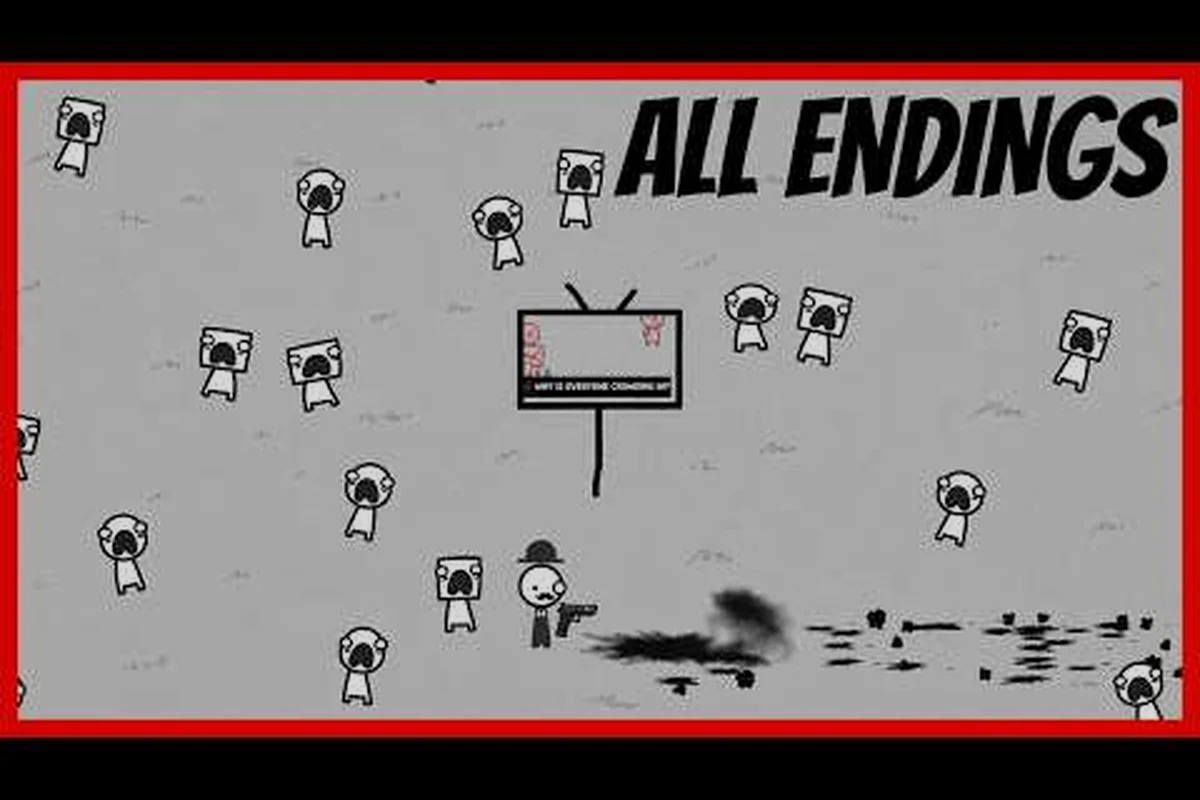
This Say Cheese Roblox guide sticks to what the official page documents as of 2026-10-31: a journalist hired by “Big Media” sent into a park to spread chaos and panic while the news reaches billions, with a stated choice between destruction and hope.
What the Official Say Cheese! Page Actually Documents
This Say Cheese Roblox guide starts with a deliberate boundary: the official Roblox page describes the experience, while many mechanical details remain unconfirmed. That distinction matters because a short marketing description can establish the premise without providing a complete rulebook for your first session.
According to the official Say Cheese! game page on Roblox, you play as a journalist working for a media organization called “Big Media.” You are sent to a park with the assignment of creating disorder and panic while a vast audience follows the resulting coverage. The page also frames the broader choice as whether to destroy a peaceful society or alter the future in a hopeful direction.
The title and opening camera-themed line suggest that media attention is central to the presentation. That is enough to explain the premise, but it does not tell you how objectives are presented, how choices are scored, or what happens after each decision. Those details are not documented on the public page, so check in game rather than assuming a particular control scheme.
| Topic | Documented on the official page | Status |
|---|---|---|
| Player role | Journalist hired by “Big Media” | Officially documented |
| Location | A park | Officially documented |
| Core assignment | Spread chaos and panic there | Officially documented |
| Presentation medium | News watched by billions | Officially documented |
| Central conflict | Destroy peaceful society or change fate to bring hope | Officially documented |
| Camera theme | Title and first line emphasize being on camera | Officially documented |
| Exact controls | Not described on the public page | Check in game |
| Choice consequences | Only the broad framing is described | Check in game |
| Progression details | No public explanation provided | Not documented |
| Inspiration | Officially linked to We Become What We Behold | Officially documented |
The public listing identifies the experience as 📸 Say Cheese! [STORY], an Adventure/Story experience released on October 19, 2026. It was updated on October 31, 2026, the same date used for the data in this guide. The listing’s category, maturity rating, and release information are useful for orientation, but they are not substitutes for direct in-game observation.
The Official Snapshot in Context
The official listing recorded 3,955,237 visits, 13,403 players, and 49,747 favorites as of 2026-10-31. It also displayed 12,154 likes and 1,369 dislikes, which is roughly a 90 percent positive rating. The creator group had 4,810 members as of 2026-10-31. These are point-in-time figures, so they can change while you read.
The listing also displayed a maximum server size of 12. That number describes server capacity rather than a documented cooperative feature. It should not be used to infer how the experience is designed to be played or whether players can influence one another’s choices.
| Official metric | Snapshot as of 2026-10-31 | What it means |
|---|---|---|
| Visits | 3,955,237 | Public page traffic at the snapshot date |
| Players | 13,403 | Players shown at the snapshot date |
| Favorites | 49,747 | Users who marked the listing as a favorite |
| Likes | 12,154 | Positive votes shown publicly |
| Dislikes | 1,369 | Negative votes shown publicly |
| Positive vote share | About 90% | Likes divided by total displayed votes |
| Creator-group members | 4,810 | Public group membership at the snapshot date |
| Maximum server size | 12 | Capacity figure, not a documented play-style promise |
This snapshot supports a basic judgment: the page had attracted substantial public interest very shortly after release. It does not reveal how many hours the game lasts, how frequently it can be replayed, or what decisions change between sessions. For a broader assessment, our guide to whether Say Cheese! is worth playing keeps platform judgment separate from the official description.
The Five Documented Pillars of the Experience
The official material supports five broad pillars: journalist role, park setting, chaos assignment, mass-media frame, and a consequential choice between destruction and hope. These pillars are useful because they describe the experience’s dramatic problem without inventing mechanics that the creator has not documented.
Role and Setting
You begin with a defined perspective: a journalist employed by “Big Media.” The assignment takes place in a park, an everyday public space that becomes the pressure point for a socially focused scenario. That combination suggests that observation, reporting, and public reactions may matter to the presentation, although their exact implementation remains not documented.
The camera reference strengthens the idea that being watched matters. However, the listing does not specify a camera interface, timing system, recording process, or scoring rule. Do not convert that visual theme into a claimed button sequence. Instead, use it as a reading lens: notice which events invite attention, whose response is foregrounded, and how the game frames the distance between the journalist and the audience.
Assignment and Consequence
Your task is explicitly disorder-oriented: the player is sent to cause chaos and panic. Yet the closing premise offers an alternative path involving hope. This creates a useful tension for a beginner. The destination is not simply “complete tasks”; the experience appears to ask what kind of social outcome your reporting will support.
Because the page does not define consequence thresholds, the honest approach is to observe cause and effect during play. Take a mental note whenever a visible event changes, then compare that event with what happened immediately before it. That method is more reliable than community speculation because it keeps your evidence tied to the current version of the game.
Media Satire as the Core Idea
The news framing gives the game a clear satirical center: private actions become public content, and an audience watches events unfold. The official page also says the experience is inspired by We Become What We Behold. That comparison is limited to the shared theme of media amplifying collective emotion; the original game’s structure or content should not be used to fill gaps in Say Cheese!.
Think about the broadcast frame as the first principle of this Say Cheese guide. Ask three questions when a scene changes: Who appears to benefit? What behavior is being normalized? Does the audience see events before, during, or after your intervention? These questions provide depth without pretending that undocumented rules exist.
Theme Boundaries and Creative Inspiration
The verified inspiration can help explain why the premise deals with emotion, publicity, and group behavior. It cannot establish what appears in a session, how many narrative routes exist, or which outcome labels apply. Community videos (as of 2026-10-31) discuss multiple endings; the creator has not published a list, a count or any ending names, so treat them as unconfirmed.
That exact sentence matters for the broader Say Cheese Roblox beginner guide because beginners often encounter third-party videos before the official page. The responsible order is: read the official premise, observe the current game, and treat community interpretation as a separate layer of evidence. Our Spoiler-free playthrough tips can support that same evidence-first approach.
| Evidence layer | What it can establish | What it cannot establish alone |
|---|---|---|
| Official Roblox page | Premise, role, setting, genre, release snapshot | Exact in-game rules |
| Direct in-game observation | Current behavior and sequence | Broader creator intent unless confirmed |
| Creator group information | Identity and ownership links | Unpublished design details |
| Community reports (as of 2026-10-31) | Areas players are discussing | Official confirmation of a claim |
| Video or screenshot evidence | A visible moment from a version | Behavior in the current release |
Reading the Media Satire Without Inventing Systems
The fastest way to misunderstand Say Cheese! is to treat every visible reaction as a rule. A startled visitor may be scenery, feedback, part of a sequence, or something else entirely. Without documented terminology, your role is to observe carefully rather than attach a universal label too early. Use a three-column observation record. First, write what visibly happens without interpreting it. Second, record what you did immediately beforehand. Third, note whether a later scene appears to acknowledge the event. Only repeated evidence should support a tentative explanation.
Separate Observation, Interpretation, and Verdict
A strong observation uses plain language: “A park visitor changed behavior after the camera focused nearby.” An interpretation adds meaning: “The camera may affect attention.” A verdict assigns confidence: “Possible influence, but not documented.” This separation keeps early curiosity from turning into an invented mechanic.
| Note type | Example wording | Appropriate confidence |
|---|---|---|
| Observation | “The view shifted toward a visitor after an action.” | Direct observation |
| Interpretation | “Attention may be directing the scene.” | Tentative explanation |
| Verdict | “Possible camera influence; check in game.” | Unconfirmed |
| Official fact | “The page establishes a journalist role and a news theme.” | Documented |
| Community report | “Players discuss that theme differently.” | Unverified context |
Next, separate cause from sequence. If two events occur close together, that does not prove one triggered the other. Look for a repeatable setup: several similar actions, several similar reactions, and a consistent transition afterward. Even then, describe the pattern as observed rather than official.
Watch Framing Instead of Guessing Outcomes
Because the official description emphasizes that billions watch the news, pay attention to framing. What receives the camera’s attention? Which actions are shown publicly? Does the presentation reward spectacle, calm, or a particular emotional response? These are interpretive prompts based on the premise, not claimed controls. A simple log can prevent hindsight distortion: This method works even when the official page does not document the deeper system. It gives you evidence you can review later instead of a story built from a single surprising scene.
-
Write down the last action before each major transition.
-
Describe the visible change without naming its cause.
-
Record whether the next sequence repeats that pattern.
-
Mark any explanation that conflicts with the official description for later review.
Use Community Information Carefully
Community reports (as of 2026-10-31) can point you toward questions worth testing, but they should not establish facts. Videos also capture a particular version and moment, so an observed outcome may reflect a different build from the one you are playing. A creator with no linked support site or public development channel makes in-game checking especially important.
For readers who prefer a compact route through the current experience, the quick video guide provides a secondary reference. Treat it as a record of play, not a substitute for the official page or the current build in front of you.
A First-Session Decision Framework
A first session should test the game’s central tension rather than chase unsupported outcomes. Your goal is to establish how the journalist premise, public attention, and your choices interact. Because exact objectives are not documented, begin with observation and compare different approaches when the game gives you an opportunity.
Start With a Baseline Run
Choose a straightforward approach and change only one meaningful thing at a time. If you repeatedly trigger the same response, note it. Then alter your behavior slightly and see whether the response changes. This is safer than switching between several actions at once, because it makes cause and effect easier to inspect.
| Step | What to observe | Why it matters |
|---|---|---|
| 1. Read the opening | Your role, location, and immediate instruction | Establishes the documented premise in practice |
| 2. Identify available inputs | Buttons, prompts, movement, or interaction choices | Shows how the current build expects play |
| 3. Record the first change | What appears after your first meaningful action | Creates a baseline reaction |
| 4. Repeat similar actions | Whether the same response appears again | Separates consistency from coincidence |
| 5. Change one variable | Modify one action, target, or route | Tests a tentative explanation |
| 6. Note framing | Who or what receives attention | Supports the documented media theme |
| 7. Review the sequence | Your notes in chronological order | Produces a reliable record for later comparison |
Compare One Variable at a Time
If you wonder whether spectacle, location, or audience attention affects the result, test those ideas independently. The official page does not identify which one is decisive, so don’t run three variables at once. A clean comparison might use the same action in a different visible context, then repeat the original action to see whether the result changes again.
Focus on controlled comparison rather than outcome hunting. A surprising result is not automatically proof, especially if a cut, transition, or unseen setup occurred. The value of the framework is that it tells you what you observed, what you changed, and whether the difference deserves further testing.
Save a Replayable Record
Keep notes outside the game while you play. Record the date, the visible opening, major choices, and your strongest observations. Avoid filling gaps with assumptions. If a scene is ambiguous, write “cause unclear” rather than choosing the most exciting explanation.
That practice makes this Say Cheese Roblox guide more than a list of tips. It gives you a repeatable method for understanding a game whose official description deliberately leaves much of the experience open. It also makes later comparison more meaningful because you can separate what the page says from what you personally observed.
When You Should Pause and Recheck
Pause when your explanation relies on a term the creator has not used, or when you remember a claim only from a thumbnail or short clip. Recheck the current interaction, then revise your note. The guide’s recommended evidence threshold is simple: official for established facts, direct observation for current behavior, and clearly marked community context for outside discussion.
| Confidence tier | Evidence needed | How to write it down |
|---|---|---|
| Established | Official page statement | “The page documents…” |
| Observed | Direct current-session evidence | “In my run…” |
| Tentative | One possible explanation | “This may…” |
| Unconfirmed | Community discussion only | “Community reports (as of 2026-10-31)…” |
| Unknown | No usable evidence | “Not documented; check in game.” |
How to Check Any Say Cheese! Claim Before You Trust It
Claim-checking is essential because third-party videos can be persuasive without being current or official. The method has three parts: identify the source, compare the claim with verified information, and test it against the current build. It is especially useful when a clip appears to reveal a hidden rule or a creator-approved route.
Step One: Identify the Exact Claim
Write the claim as a testable sentence rather than a vague impression. “Attention affects what happens” is testable. “The camera is broken” is not. Replace emotive language with an observable behavior and identify what evidence would support or weaken the statement.
Step Two: Classify the Source
Use the claim verification log to keep official information, direct observation, and community discussion separate. It helps to record the source date because a released experience can change after filming. The official listing was updated on October 31, 2026, while this guide uses the same snapshot date for all public figures.
| Claim | Where it came from | Verdict |
|---|---|---|
| The player is a journalist for “Big Media” | Official Roblox page | Officially documented |
| The assignment takes place in a park | Official Roblox page | Officially documented |
| The experience uses a news theme | Official Roblox page | Officially documented |
| A particular choice causes a specific result | A clip or player account | Test it in the current game |
| A hidden sequence is universally reachable | Community discussion | Unconfirmed unless directly observed |
| A specific outcome has an official name | Creator publication | Not documented as of 2026-10-31 |
| The original inspiration has the same structure as Say Cheese! | Cross-game comparison | Reject; only the shared theme is verified |
Step Three: Test Without Assuming the Answer
Check in game when a claim concerns an input, consequence, or route. Follow the normal flow of the session and watch for a repeatable response. If a claimed feature cannot be located, do not automatically conclude that it cannot exist; the sequence, context, or version may matter. Record the attempt so your notes remain useful.
Step Four: Review Against the Official Frame
The official premise provides a stable baseline. Does the claim conflict with the role, setting, or central choice? If it does, keep it provisional unless the creator has clarified it. If it aligns, it still needs direct evidence before being treated as current behavior.
This approach gives the Say Cheese guide a durable foundation: official facts remain official, direct observations remain specific, and community speculation stays clearly labeled. It also keeps Say Cheese Roblox tips practical, because each tip can be traced to something you can observe rather than a rule you merely inherited.
Practical Say Cheese Roblox Tips for a New Player
The best first-session tip is to separate playing from analyzing. Try the experience as a journalist trying to influence a public situation, then pause briefly to record what changed. This protects the story from becoming a checklist of unsupported theories.
Preserve Enough Detail to Compare
Write down the context of important events: where you were, what you did, who appeared to notice, and what the camera emphasized. Your notes do not need to be extensive. One accurate sentence can be more valuable than a long interpretation built on uncertain details.
Treat Contradictions as a Reason to Test
A clip that seems to show two different responses may involve context that the uploader did not explain. Rather than declaring the game inconsistent, repeat the visible setup and check whether the difference persists. This method is particularly helpful when comparing footage recorded before and after an update.
Avoid Turning Theme Into Mechanic
The park, journalist role, camera motif, and public audience create a strong media-satire frame. However, a theme can support several implementations. The safest Say Cheese Roblox tips are therefore observation prompts: notice attention, compare responses, and record cause-and-effect uncertainty.
Keep Platform Expectations Separate
Roblox itself is a free-to-play platform available across supported devices, subject to account and parental-control settings. That is platform-level knowledge. It does not prove that every control works equally on every device for this particular experience, so check in game when device behavior matters. If you are deciding how to access or run the experience, our Say Cheese! platform overview can help with platform-level details. Keep it separate from narrative claims, because a supported device does not automatically validate every community-reported behavior.
Turning the Guide Into a Personal Evidence Record
A useful conclusion should clarify the game’s appeal without pretending that the public page explains every rule. Say Cheese! officially places you in the role of a journalist, sends you to a park, and frames your actions as content for a mass audience. Its central conflict asks whether you will destroy social peace or pursue a hopeful alternative. That is a strong foundation for an interactive satire.
Your first session can answer only the questions your current build presents. Begin with the five pillars, record one variable at a time, and keep a claim log for anything outside the official material. That process gives you a cleaner Say Cheese Roblox how to play experience because you learn the game through repeatable observation rather than borrowed certainty.
As of 2026-10-31, the official page documented the premise but not the deeper operational rules. Community videos (as of 2026-10-31) discuss multiple endings; the creator has not published a list, a count or any ending names, so treat them as unconfirmed. The honest guide is therefore not the one with the most dramatic claims. It is the one that teaches you to observe, compare, and update your understanding responsibly.
Frequently Asked Questions
What is the Say Cheese Roblox guide based on?
This Say Cheese Roblox guide is based on the official Roblox listing and its public snapshot from 2026-10-31. It separates confirmed details about the journalist role, park setting, media theme, and central choice from information that remains not documented. Community claims are included only when they are clearly labeled and treated as unconfirmed.
Is Say Cheese! suitable for a new Roblox player?
The official listing identifies it as an Adventure/Story experience with a Minimal maturity rating, making it an approachable starting point in terms of presentation. Its media theme may still involve complex or serious situations, so younger players should follow Roblox account and parental-control settings. Exact pacing and difficulty are not documented; check in game.
Can I trust videos about Say Cheese! without checking the official page?
Videos can show real footage from a particular build, but they may become outdated and can omit context. Use the official page to establish the premise, then compare the video with your current session. Community reports (as of 2026-10-31) are useful for identifying claims to test, not for presenting unverified behavior as an official rule.
What should I pay attention to during my first session?
Focus on the five documented pillars: your role as a journalist, the park setting, the disorder-oriented assignment, the mass-news frame, and the choice between destructive and hopeful outcomes. Record visible cause and effect without immediately assigning a rule. Exact controls and consequences are not documented, so check in game as you observe.
Is the official page enough to understand every part of Say Cheese!?
No. The official page clearly explains the premise and central conflict, but it does not provide a complete rulebook for the current session. It also does not publish a creator-confirmed list of outcome names. Treat the page as the stable foundation, direct play as your primary evidence, and community material as context that requires verification.