
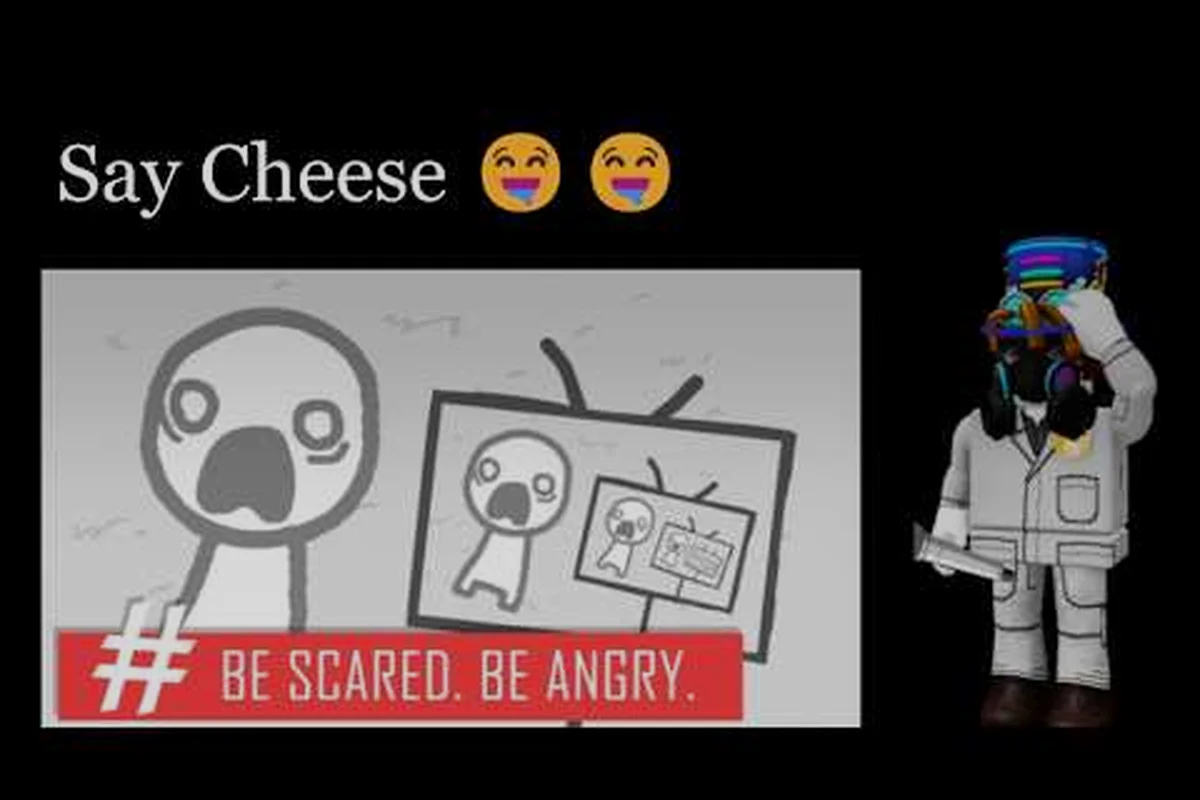
This Say Cheese Roblox quick guide helps you protect a limited session for the choices that matter most. Because the official premise centers on journalism, public attention, and disruptive decisions, you should treat each choice as a deliberate test rather than rush blindly.
What a Quick Run Can Realistically Cover
Say Cheese! is a short-form Roblox story experience built around a journalist working for “Big Media.” The official description places that journalist in a park and frames the mission as spreading disorder and panic while a large audience watches the news. It also presents a broad moral divide between disrupting a peaceful society and changing the situation to create hope.
That premise makes a decision-focused session more useful than a speed-focused one. The official game page lists the release date as October 19, 2026, and the experience as Adventure / Story with a Minimal maturity label. It also recorded 3,955,237 visits, 13,403 players, 49,747 favorites, and 12,154 likes versus 1,369 dislikes as of 2026-10-31.
| Public snapshot on 2026-10-31 | Reported value | Practical meaning |
|---|---|---|
| Visits | 3,955,237 | The experience already has substantial exposure, but popularity does not reveal its route length |
| Players | 13,403 | Many visitors may still be deciding whether the premise suits them |
| Favorites | 49,747 | Strong interest in returning later |
| Likes vs. dislikes | 12,154 vs. 1,369 | About 90% of visible votes were positive |
| Server capacity | 12 | The official limit for one server, not a promised co-op feature |
Those figures describe visibility, not playtime. The official page does not document a completion time, a fixed number of scenes, or a required route, so treat any exact duration as not documented and use the thirty-minute plan as a flexible budget.
A fast run is about decisions, not speed
A rushed player can still choose poorly. The better goal is to understand how the park, the camera theme, and the news framing shape each option. If you want a broader first-play perspective, the Say Cheese! first-playthrough overview explains what to watch for before making a fast route.
The official description says the player is “on camera,” which suggests that public attention is part of the core idea. It does not document exact camera controls, branching rules, or the consequences attached to individual actions, so check in game rather than relying on a universal checklist.
Build a quick-run boundary
Before pressing play, set one visible limit, such as a 20-, 30-, or 45-minute stopwatch, and note the exact moment your run ends. For example, a 30-minute boundary should cover learning the premise, testing meaningful choices, and reaching a deliberate stopping point; it prevents the “Say Cheese!” experience from becoming an endless click-through session. Use the timer as a decision checkpoint: if the final choice still feels unclear when the limit arrives, review the relevant prompts and consequences before closing the game, then record why the choice fit.
-
Thirty-minute limit: Learn the premise, test several meaningful choices, and reach a deliberate stopping point.
-
Twenty-minute limit: Prioritize one major decision path and avoid optional experimentation.
-
Forty-five-minute limit: Compare more choices, but stop if repetition starts to reduce the value of the session.
The practical benefit is that you protect enough time to read context instead of merely clicking through. A quick run should end with a clear understanding of why the final choice felt appropriate, not with a vague sense that the screen moved quickly.
Priorities for a Thirty-Minute Session
The most effective priority ladder separates essential comprehension from optional exploration. This matters because the official story framing depends on emotion and media influence; rushing the context can make the experience look like a string of unrelated prompts rather than a deliberate moral exercise.
| Priority | Task | Payoff |
|---|---|---|
| 1 | Read the opening situation and identify the journalist’s assignment | Understand the role and the source of the central pressure |
| 2 | Notice how the park, camera framing, and news audience affect the tone | Recognize the media theme that motivates the choices |
| 3 | Make each available decision deliberately | Preserve the story’s cause-and-effect structure |
| 4 | Compare your final outlook with your earlier behavior | Gain a meaningful summary of your run |
| 5 | Review missed choices only if time remains | Avoid turning a short session into endless retracing |
Priority one: identify the assignment
The journalist is hired by “Big Media,” sent to a park, and expected to spread chaos and panic while billions watch the latest news. That is the documented framework, not an inference. Your first task is therefore to observe how the game presents the assignment and how your actions appear within that public context.
The official page does not document a precise timer or scoring formula, so avoid optimizing for a number that may not exist. Instead, track three simple observations: who benefits, who reacts, and how attention changes. These questions fit a short session and remain useful even if the interface uses different language.
Priority two: watch the framing
The title and opening line emphasize the camera. That means the way information is presented may matter as much as the literal action. Look for changes in composition, audience reactions, and the information given to you. Specific visual effects are not documented, so describe only what you actually see rather than assuming a named operation.
For a broad reference on the experience’s shorter, satire-focused identity, the news and short-game overview provides useful context without claiming that the creator has documented a complete route. This distinction matters when reviewing the Say Cheese Roblox quick guide: footage may reveal a compact sequence or recurring visual gag, but it should not be treated as confirmation of a full walkthrough, fixed objective order, or permanent mechanic. Treat any documented steps as video-specific observations, then separate clearly shown interactions from interpretation about the game’s satire-driven design.
Priority three: make one clean decision at a time
A clean decision means you know what the option appears to represent before selecting it. Avoid selecting merely because an option is phrased confidently, humorous, or severe. The official framing contrasts destruction of a peaceful society with changing fate to create hope, so both possibilities may carry meaningful consequences rather than forming a simple good-versus-bad score.
For each major choice, record the option’s exact wording, the visible prompt that triggered it, and the character or scene shown before you confirm. This is useful in Say Cheese! because a cheerful-looking decision can still alter the outcome’s tone, while a threatening option may point toward a hopeful reversal rather than simple destruction. Comparing the screen before confirmation with the response afterward also helps you identify whether an option changed the game state, advanced a story branch, or only produced a temporary reaction.
-
The situation before the decision.
-
The direction your selection supports.
-
The immediate response you observe.
Because Say Cheese! does not publish a verified branching chart, treat a decision log as an observation record rather than a complete outcome map. For example, note whether choosing the hopeful-reversal wording led to a new scene, altered dialogue, or only a temporary character reaction; repeat the run with another choice and compare the pre-confirmation prompt with the resulting game state. This can reveal a repeatable branch sequence without claiming an unsupported total number of endings.
What to Skip Without Regret
A short session benefits from deliberate omissions. The game’s media theme can make minor interactions feel meaningful, but a first quick run does not need to exhaust every visible option. The key is to skip low-information actions before skipping choices that could establish the story’s direction.
| Content | Cost of skipping | Recoverable? |
|---|---|---|
| Repeating a prompt without changing your decision | Low | Yes; it adds little to the run |
| Collecting several nearly identical interactions | Low to moderate | Usually yes, but exact optional content is not documented |
| Inspecting every visual detail before acting | Moderate | Yes; note the detail and continue |
| Testing a choice you already understand | Moderate | Yes; keep it for a later comparison run |
| Missing a major decision | High | Uncertain; the official page does not document whether every choice can return |
| Skipping the opening premise | High | No; it supplies the context for the journalist scenario |
| Leaving the final moral contrast unresolved | High | No; it is central to the official framing |
Community videos dated 2026-10-31 mention several possible endings in Say Cheese Roblox, but the creator has not released an official ending list, total count, or confirmed names. Treat those clips as leads for a later comparison run rather than a spoiler checklist: note the decision or final moral contrast shown in a video, then test the alternate route yourself instead of assuming every reported outcome is reachable.
Distinguish exploration from commitment
Not every interaction needs equal attention. If a prompt has no apparent bearing on the journalist’s assignment, record it briefly and move on. By contrast, a prompt that asks you to intensify disorder, protect calm, manipulate attention, or reconsider the assignment deserves more attention because it directly echoes the documented premise.
Because optional systems are not documented, the safest rule is simple: skip repetition, preserve meaning. If you cannot explain how an action relates to the assignment after a quick observation, continue and review later. If every option clearly changes your role in the story, spend the time.
Save the fine inspection for a second visit
The experience’s 49,747 favorites as of 2026-10-31 suggest that players see enough value in it to want another look, but favorites do not prove a short length or identify optional content. Use a first run to map the central choice pattern. Use later visits for visual details and comparisons that lack urgency.
That division of labor prevents completion anxiety, where a player stays only because they fear missing something, even when the main story decision has already been made. If you need a fuller route later, the complete gameplay walkthrough can serve as the reference point.
Recording Enough to Return Later
A quick-run record turns an improvised session into useful evidence. Write it immediately after finishing, while your reasoning is still clear. The goal is not to reconstruct every line; it is to remember the choices, the framing, and the questions that remain for another session.
| Field | Keep | Why |
|---|---|---|
| Session length | Actual start and finish times | Shows whether your chosen budget matched the experience |
| Major decisions | The option selected and a short reason | Captures the route without claiming unsupported mechanics |
| Audience reaction | What changed after each choice | Records the theme where observable |
| Visual framing | One or two standout details | Separates presentation from a complete walkthrough |
| Final outlook | Your own interpretation | Records meaning without inventing creator-defined labels |
| Open questions | Details to verify next time | Prevents unsupported guesses from becoming assumptions |
Use a one-minute summary
Write six lines. List your role, the first important choice, the second important choice, the most noticeable visual shift, the final choice, and one question you still have. A six-line note is enough to preserve the emotional arc and basic route without pretending that it documents every interaction.
The journalist-versus-audience contrast is particularly useful. In your own words, record whether you felt like an active participant, a performer, a mediator, or something else. This interpretation is personal rather than an official classification, but it can reveal how strongly the camera and news framing shaped your experience.
Verify community claims against the game
A Say Cheese Roblox video guide can help another player explain a route or reaction, but it should remain a secondary reference. The creator has not published a public guide, a changelog, a website, or an official video channel as of 2026-10-31. The Mechanical Boy LLC group exposes one public experience, while the owner profile does not link a separate support channel.
This means a third-party recording can show what one player experienced, but it cannot establish creator-approved terminology. For that reason, record your own observations before watching a solution-oriented video. If you compare notes afterward, separate what you remember from what the video shows.
Keep the record honest
Write “not documented” when the official page is silent. Write “community reports (as of 2026-10-31)” for claims that appear in player coverage. Use “check in game” for details you can verify in the experience. This three-part labeling system prevents a confident summary from becoming false certainty.
When Quick Becomes Rushed
Speed is useful only while it supports comprehension. A session becomes rushed when you start selecting before understanding the setup, stop noticing the audience’s changing position, or treat every click as essential. The official premise depends on a journalist’s actions within a public spectacle, so bypassing that relationship can remove the very thing the experience is designed to examine.
| Warning sign | Why it matters | Better adjustment |
|---|---|---|
| Repeating the same action out of anxiety | It produces motion without new information | Choose the option that best matches your intent |
| Ignoring the setup | Your decision loses its ethical context | Pause for the prompt and restate the assignment |
| Rereading every prompt | Text becomes the only focus | Skim once, then check what the scene communicates |
| Treating a popular video as gospel | It may describe an unconfirmed route | Verify key claims in game |
| Refusing to stop | Exploration consumes the session | Save secondary details for a later run |
| Forcing a moral label too early | The experience may challenge simple judgments | Record behavior and outcome together |
A practical fifteen-minute fallback
If only fifteen minutes remain, choose one major decision and make it deliberately. Read the immediate setup, watch how the camera frames the moment, select the direction you can defend, and note the resulting change. You will likely miss side details, but you can still finish with a meaningful decision rather than a collection of accidental inputs. This is especially useful when your available time changes unexpectedly. A concise Say Cheese! beginner guide can help identify the basic premise, while this quick guide keeps the emphasis on protecting decision quality and documenting what deserves another visit.
Know when to stop
Stop when you have reached the outcome your session was designed to explore, not merely when every visible option disappears. A good stopping point might include your final choice, the immediate public reaction, and a short reflection on whether your actions matched the assignment. That is enough to establish a satisfying first run even when optional content remains unexamined.
The broader platform context is useful for understanding account and device considerations, but it does not fill gaps in this game’s route. Wikipedia's entry on the Roblox platform explains the platform’s client and account framework; anything specific to this experience should still be checked on its own page or in game.
A Practical Plan for Your Next Session
The best Say Cheese Roblox quick guide is not a promise of a fixed completion time. It is a decision framework built around the official premise: you are a journalist, the park is the setting, the public is watching, and your actions push the story toward disorder or hope.
Use the priority ladder to protect the opening context, the major decisions, and a final reflection. Skip repeated prompts and minor details without regret, then record enough to make a second session purposeful. If your time shrinks, take one clean choice instead of turning the entire run into a frantic sequence of clicks. That balance keeps the quick-run format useful without pretending that every undocumented detail is known.
Frequently Asked Questions
How long is a Say Cheese Roblox session?
The official page does not document an exact completion time, so any fixed estimate would be unverified. A thirty-minute budget is a practical planning target rather than a developer-confirmed length. Measure your own run, record the start and finish times, and adjust the budget based on how quickly you read and make decisions.
Can a quick guide reveal every outcome in Say Cheese!?
No. The creator has not published a count, a list, or names for the available outcomes as of 2026-10-31. A short guide can help you prioritize major decisions and understand the premise, but it cannot honestly guarantee complete coverage. Keep an open question list and verify each additional possibility by playing it yourself.
Should I watch a video before playing Say Cheese!?
A video may provide another player’s interpretation, but it can also spoil the discovery that makes a short run engaging. Watch beforehand only if you prefer a highly guided experience and accept that community coverage is not creator-confirmed. Otherwise, record your own choices first, then compare notes with a video afterward.
What should I track during a short Say Cheese! run?
Track your major decisions, the reasons behind them, the audience’s visible reaction, and the framing that stands out most. Also note your final interpretation of the journalist’s role. These observations are more useful than a long checklist because they preserve the experience’s causal structure without relying on mechanics the official page does not document.