
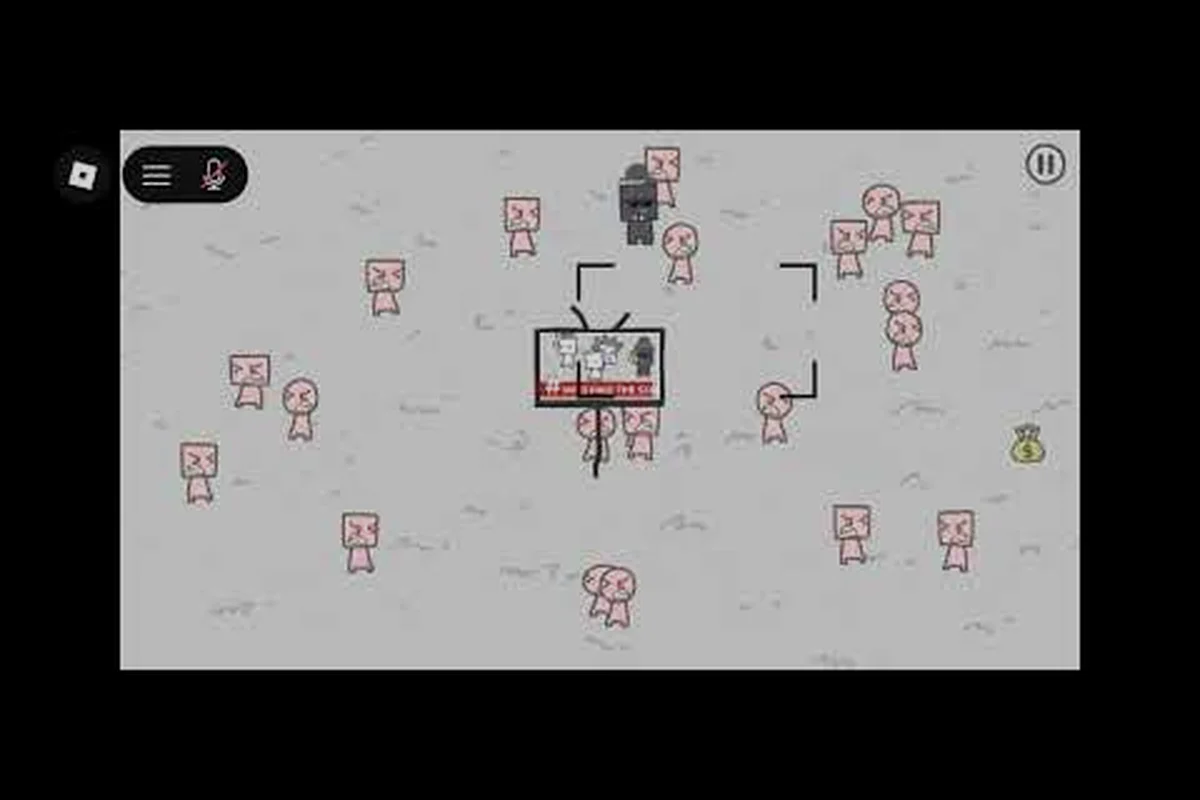
Say Cheese! Roblox complaints matter because they reveal whether the experience delivers its stated media-simulation premise or creates avoidable friction. The official concept centers on a journalist spreading chaos for a global audience, so the fairest criticism asks whether players received that premise in a clear, stable, and satisfying form.
The Complaints Players Actually Make
The most visible Say Cheese! Roblox criticism tends to focus on length, pacing, clarity, technical stability, and whether the ending feels earned. These complaints sound severe when placed together, but each one should be tested against the experience the creator actually promised. A short interactive story does not necessarily fail because some players expected a long collection session.
The official Roblox page describes an Adventure/Story experience about a journalist hired by “Big Media,” sent into a park to cause disorder while a huge audience follows the broadcast. Its central choice is framed as preserving a peaceful society or changing fate to bring hope. That premise makes the game’s public identity clearer than its individual implementation details, which are not documented beyond the page.
Separating recurring themes from one-off reactions
Community reports (as of 2026-10-31) indicate that praise and criticism often concern the same feature: the idea of a camera-centered news story. Some players value the unusual concept, while others dislike the experience’s brevity or feel that its ideas are communicated too abruptly. One reaction is not necessarily evidence of a defect.
| Complaint | Valid? | Why |
|---|---|---|
| The experience is shorter than expected | Sometimes | A mismatch with expectations is real, but the official page presents a compact narrative experience rather than promising extensive replay value. |
| The premise takes too long to become clear | Potentially | Clear communication matters, although the creator has not documented every sequence or interaction. |
| The story resolves too abruptly | Subjective | Narrative payoff varies by player, and no official description promises a particular structure. |
| The game has visible technical problems | Potentially | Control, readability, or stability issues can disrupt the premise, but specific faults should be tied to reproducible observations. |
Complaint validity depends on the promise being tested. A 20-minute camera-focused news story does not breach a promise of extensive replay value, whereas unresponsive camera controls, an illegible newsroom prompt, or a reproducible crash can indicate a genuine defect. This distinction keeps Say Cheese criticism evidence-based: community feedback should be matched to the official compact narrative description, the specific sequence or camera interaction affected, and whether the issue can be reproduced consistently.
What the public response actually looks like
The game’s official Roblox listing had 3,955,237 visits, 13,403 concurrent players, and 49,747 favorites as of 2026-10-31. It also displayed 12,154 likes against 1,369 dislikes, a roughly 90% positive public response. Those numbers suggest broad approval rather than universal dismissal, although a positive ratio cannot reveal whether specific complaints are justified.
The creator’s group had 4,810 members as of 2026-10-31, while the game was released on 2026-10-19. Its short public history means criticism may still be forming. Early reactions can overrepresent players who disliked the concept, while equally loud praise may come from viewers who shared clips that worked better than expected. The group owner's Roblox profile is useful when checking whether creator information comes from the same person behind the experience. That verification matters because the public group does not link a separate website, support page, or other social channel.
Too Short: A Fair Criticism?
Saying that Say Cheese! Roblox complaints often mention shortness is fair, but the conclusion depends on what “short” is supposed to mean. A compact experience can still deliver a complete emotional arc, especially when its purpose is to stage a moral choice rather than build a long progression system. Length becomes a defect when it prevents a promised idea from developing, not merely because the session ends sooner than expected.
The compact-experience test
A practical evaluation should ask four questions. First, does the opening establish the journalist premise? Second, does the player understand why actions matter? Third, does the climax connect back to the public’s reaction and the presented choice? Fourth, does the session close with a deliberate final impression? These questions assess delivery without depending on details the official page does not document.
| Test question | Strong result | Weak result |
|---|---|---|
| Premise | The player understands the journalist and audience relationship. | The news framing is hard to identify or feels unrelated to the action. |
| Player agency | Choices appear to influence the situation described by the story. | The player can act, but the result feels disconnected from what happened. |
| Narrative payoff | The conclusion reflects the theme of media-driven behavior. | The session ends before the central idea receives a coherent response. |
| Replay value | Curiosity about the premise justifies another session, if such sessions vary. | Repetition only repeats the same result without adding meaning. |
Completion is different from density. A dense game may frustrate players who want clarity, while a brief game can feel complete if every action supports the stated theme. For Say Cheese, that means the journalist premise, player choice, and public reaction should form one readable cause-and-effect chain; a short session can still succeed when its clips or replay value leave the community with a clear takeaway, whereas extra length adds little if it dilutes the central choice.
When brevity becomes a defect
Brevity becomes a genuine problem if a control fails, text or objectives are unreadable, or the story cuts off before its central choice resolves. It is less conclusive when a player simply wanted more scenes, longer dialogue, or a larger collection of outcomes. Those are preference differences, not broken promises.
The creator’s description explicitly emphasizes the choice between destroying a peaceful society and changing fate to bring hope. If the experience offers little meaningful consideration before presenting that choice, players can reasonably question whether the theme has been earned. If the choice follows understandable actions and produces a coherent conclusion, the compact scale may strengthen rather than weaken the story.
A useful distinction is between underdeveloped and concentrated. Underdeveloped means essential context, interaction, or consequence is missing. Concentrated means the creator uses a limited amount of material to make one point quickly. Players can dislike concentration while still recognizing that the experience fulfilled its narrow promise.
Not Enough Content: Whose Expectation?
Complaints about insufficient content often reveal more about the player’s reference points than about Say Cheese! itself. A Roblox visitor may compare the title with another short story, a replay-heavy game, or a long narrative campaign. Because the official listing identifies the experience as Adventure/Story and gives no promise of extensive variety, those comparisons can distort the discussion.
Where expectations come from
The title, camera imagery, and official premise create specific expectations. Players may expect satire, a branching narrative, or a social simulation because media amplification is central to the concept. The official page does not document the number of playthrough variations, and community videos (as of 2026-10-31) discuss multiple endings; the creator has not published a list, a count or any ending names, so treat them as unconfirmed.
| Source | Expectation created | Reality |
|---|---|---|
| Title and camera imagery | A visual comedy or interactive media scenario. | The official premise supports a journalist-and-broadcast theme, but it does not specify every presentation choice. |
| Roblox discovery page | A social, replayable experience because many Roblox titles favor repeated play. | The page identifies Adventure/Story and does not promise social mechanics. |
| Short-form clips | A fast, punchline-driven experience. | Clips may compress the impact, while the full session provides context that is not visible in a clip. |
| Theme description | A satire about collective emotion amplified by news. | The stated inspiration supports that theme at a high level, without documenting the full story. |
| Creator group | A growing game with an established roadmap. | Public information is limited, so future plans should be treated as undocumented. |
Expected replay depth is an inference, not a documented feature. The table supports a replayable framing—its Adventure/Story classification and community reports of multiple endings suggest repeated playthroughs—but neither confirms branching pathways, ending totals, nor social replay mechanics. This is why saying the game “needs more content” remains too vague to evaluate responsibly: a complaint should specify whether players lack additional endings, journalist-and-broadcast scenarios, or recurring community events, rather than treating an unverified replay-depth expectation as a promised feature.
Comparing the complaint with the promise
Suppose a player expected substantial branching, but the official page never stated that it would provide it. The disappointment may be genuine, yet the criticism should focus on whether the creator communicated what was available. A better complaint is specific: “I expected multiple routes and could not find them,” followed by an observation about what the player did encounter. For a more detailed look at how the premise has been interpreted, the media criticism and news-satire analysis can provide useful context. It should still be read as interpretation, not as a substitute for the creator’s own documentation.
The same caution applies to video evidence. Say Cheese! Roblox clips can demonstrate reactions, pacing, or audiovisual tone, but they can also omit setup and make an abrupt transition look more polished or more confusing than it is. Community videos (as of 2026-10-31) provide evidence of third-party coverage, not a comprehensive record of the experience.
Bugs and Polish Complaints: From Irritation to Evidence
Technical complaints deserve stricter verification than taste-based criticism. A control that appears unresponsive, an objective that cannot be understood, or text that overlaps important visuals can directly interfere with the experience. By contrast, a subjective dislike of the camera style is not a bug and should not be presented as one.
A reproducible bug report
A useful report identifies where the problem occurred, what the player expected, what happened instead, and whether it repeated. It should also avoid assumptions about systems the official page does not document. “Check in game” is the appropriate instruction when the player is unsure how a feature works.
| Observation | Classification | Best response |
|---|---|---|
| A visible control does not respond | Likely defect | Reproduce the action and note the exact condition. |
| An important instruction is unreadable | Likely defect | Record the text overlap or contrast problem and check whether it persists. |
| The player cannot tell what is interactive | Potential clarity issue | Describe the visual cues that were missed. |
| The visual style feels plain | Preference | Explain the impact without calling it broken. |
| One session differs from another | Investigate | Record device, client, and whether the difference repeated. |
Reproducibility separates a bug report from a bad session. Even one severe technical problem can justify criticism, but the confidence of the response should rise when several sessions produce the same result. For example, if a Say Cheese! player reports that a photo-zone prompt or camera control fails to respond, the report becomes stronger when the same interaction fails across multiple attempts, with the device, client, and exact game conditions recorded each time. If the issue occurs only once and behaves differently on another session, it should remain in the “investigate” category rather than being presented as a confirmed defect.
Roblox-specific quality checks
Roblox is available across multiple device families, and platform-level differences can affect text rendering, control clarity, and performance. Those are general platform considerations, not proof of a fault in this particular game. A reviewer should state whether the issue happened on mobile, desktop, or console and avoid generalizing from one device to every player.
The official listing showed the game under a Minimal maturity designation and a maximum server capacity of 12 as of 2026-10-31. Capacity does not establish that the game was designed for cooperative play, and it should not be used to excuse or explain away visual problems. Similarly, the public favorites and voting totals reveal audience sentiment but cannot identify the technical cause of a complaint.
Players can make their own bug reports more credible by avoiding broad labels such as “broken” or “unfinished.” A precise description is more useful to the creator and more useful to other players. If the cause remains unclear, the report should state that directly and invite no speculation about undocumented systems.
Separating Preference From Defect
The strongest Say Cheese! Roblox criticism identifies a specific gap between the official premise and the delivered experience. The weakest criticism treats personal taste as a broken promise. This distinction protects the creator from unfair pressure while ensuring legitimate problems are not dismissed as mere artistic differences.
A three-part evaluation framework
Use the promise, the player's experience, and the reproduction to classify each complaint about Say Cheese! Promise comes from official documentation, including the stated objectives, branching limits, and media theme. Experience comes from direct observation of the Roblox playthrough, while reproduction checks whether the same sequence produces the same confusing objective, abrupt conclusion, or other technical issue. For example, a reviewer claiming that the ending felt premature may only be expressing a preference, whereas an unreadable objective or a result that ignores the chosen branch warrants a repeatable test across multiple runs.
| Statement | Type | Response |
|---|---|---|
| “The experience ended sooner than I wanted.” | Preference | Acknowledge the disappointment without presenting it as a failure. |
| “The objective was unreadable during the action.” | Defect | Document the moment and presentation conditions. |
| “The conclusion did not reflect the choice I made.” | Possible defect or unclear rule | Verify what changed, then check the result in game. |
| “I expected more branching than the page describes.” | Expectation gap | Adjust the expectation to the documented scope. |
| “The premise uses an interesting media theme.” | Praise | Recognize the idea without treating it as proof of flawless execution. |
Preference deserves respect; defects deserve evidence. This framework keeps Say Cheese! criticism precise by separating the media-themed premise from its in-game execution. For example, praising the cheese-themed Roblox concept while finding an objective unreadable during the action leads to two distinct judgments, not a single verdict. Likewise, a shortened ending and a conclusion that ignores the chosen branch require different evidence: the former may reflect personal pacing preference, while the latter calls for a reproducible test of the branching rules.
Praise should also be specific
Say Cheese! Roblox praise often centers on the unusual journalist premise, the camera theme, and the way a public audience transforms individual actions into a spectacle. General enthusiasm is still meaningful, but specific praise helps explain whether the game succeeds at its intended purpose.
The roughly 90% positive voting ratio as of 2026-10-31 supports the claim that the project has broad appeal. It does not mean every element works equally well for every player. A game can be praised for its idea and criticized for communicating that idea too abruptly, and both statements can be accurate.
For reaction-driven examples, the collection of notable player moments and community clips illustrates how the media premise travels through player-created content. Clips often reward a striking reveal or punchline, so they may be a better measure of immediate impact than of overall completeness.
What the controversy actually demonstrates
The controversy around Say Cheese! Roblox is better understood as a disagreement over scale than as a single unified revolt. Some players want a fuller interactive satire, others expect a quick social-media story, and a substantial audience appears satisfied with the compact concept. These groups can all describe their experience accurately while expecting different levels of content.
The absence of a public roadmap, changelog, or separate support page means that future changes are difficult to predict. The creator group is the verified public home, but no additional channels are documented there as of 2026-10-31. Any promised revision should therefore be evaluated when it appears in the official experience rather than treated as a likely remedy for every complaint.
The most defensible conclusion is therefore conditional: the public reaction is strongly positive, while the recurring complaints are plausible but uneven. Some concern a short and deliberately focused narrative; others require direct verification. Fair criticism protects both artistic intent and player trust.
A Practical Framework for Evaluating Future Reactions
Because Say Cheese! Roblox community reaction will continue to change, reviewers need a repeatable way to distinguish new evidence from recycled disappointment. A structured review can focus on the official promise, immediate comprehension, technical execution, and whether the central choice lands without requiring undocumented details.
Conduct a first-session review
Start with the official description and note its basic claims before playing. During the first session, record where the journalist role becomes clear, where the park setting is communicated, and how the broadcast framing is presented. Avoid importing ideas from another game with a similar theme, because shared inspiration does not mean shared content.
| Review checkpoint | Question | Useful evidence |
|---|---|---|
| Opening clarity | Is the player role understandable? | Timestamp or description of the first clear moment. |
| Theme delivery | Does the broadcast idea affect the experience? | Specific action and its on-screen context. |
| Technical quality | Are instructions and controls readable? | Device, client, and reproduction details. |
| Decision consequence | Does the central choice produce a relevant result? | Direct observation of the choice and conclusion. |
| Replay incentive | Is there a reason to try again? | A stated reason, while avoiding undocumented claims about variation. |
A consistent review separates the game’s identity from the reviewer’s preferred genre. Revisit the same Say Cheese Roblox checkpoints after each update, comparing the opening role prompt, park broadcast framing, control readability, and result of the central choice. For example, if an update changes when the journalist role becomes clear, that shift can be recorded against the “Opening clarity” checkpoint; if broadcast framing changes without altering the underlying outcome, the “Theme delivery” evidence should distinguish presentation from mechanic. This makes later praise or complaints traceable to specific changes rather than shifting standards, while avoiding unsupported claims about new features or hidden variations.
Compare clips with full sessions
Say Cheese! Roblox memes often isolate a single line, image, or reaction, and that format can be revealing without being comprehensive. A clip may capture the satirical premise better than a long explanation, yet it may also remove context that makes the scene work. Viewers should note whether the creator’s post identifies the scene’s role in the experience and avoid assuming a polished video equals a complete evaluation.
The same rule applies to Say Cheese! Roblox community reaction videos. If several players report the same pacing or readability issue, that pattern deserves attention; if only one creator frames the experience negatively, it remains one perspective. Community reports (as of 2026-10-31) should be used as leads for verification rather than treated as population-level survey results.
Revisit the complaint after updates
The official listing was last updated on 2026-10-31, the same date used for this assessment. Future versions may clarify objectives, adjust pacing, or fix presentation, so old criticism should carry a version marker. Reviewers should record the date and describe what changed rather than repeating a complaint as if it still applies. Players interested in broader participation patterns can consult the community overview for playerbase and discussion context. The useful question is not whether the audience is “large enough,” but which expectations that audience brings into a compact narrative game.
Frequently Asked Questions
Are Say Cheese! Roblox complaints mostly negative?
No. The official Roblox page displayed 12,154 likes and 1,369 dislikes as of 2026-10-31, producing a roughly 90% positive ratio. Complaints about length, pacing, clarity, and polish remain valid subjects for individual review, especially when a technical issue interferes with play or when the experience fails to communicate its stated premise.
Is the game officially described as short?
No specific duration appears on the official Roblox page as of 2026-10-31. It is categorized as Adventure/Story and presents a journalist-and-media premise with a central choice. Because an exact length is not documented, any precise claim about its runtime should be checked in game rather than treated as an official specification.
Should short narrative games receive the same criticism as longer ones?
A short game can be judged against a different question: does it deliver a coherent premise, meaningful decisions, and a satisfying conclusion within its compact scope? A specific mismatch, such as an unreadable objective, deserves criticism regardless of runtime, while wanting more scenes remains a preference unless substantial depth was promised.
Are Say Cheese! Roblox clips reliable evidence of bugs?
Clips are useful for showing presentation, reactions, and recurring community themes, but they may omit setup or use edited timing. A reproducible technical problem requires details about the device, client, action attempted, and repeated result. Use clips to identify what to test, then verify the issue directly before treating it as a confirmed defect.
What praise for Say Cheese! appears well supported?
Its documented media-centered premise, camera theme, and broad public approval provide the strongest foundation for praise. As of 2026-10-31, the game had nearly four million visits, almost fifty thousand favorites, and a strongly positive public vote. Specific praise for execution still depends on each player’s direct experience rather than aggregate numbers alone.