
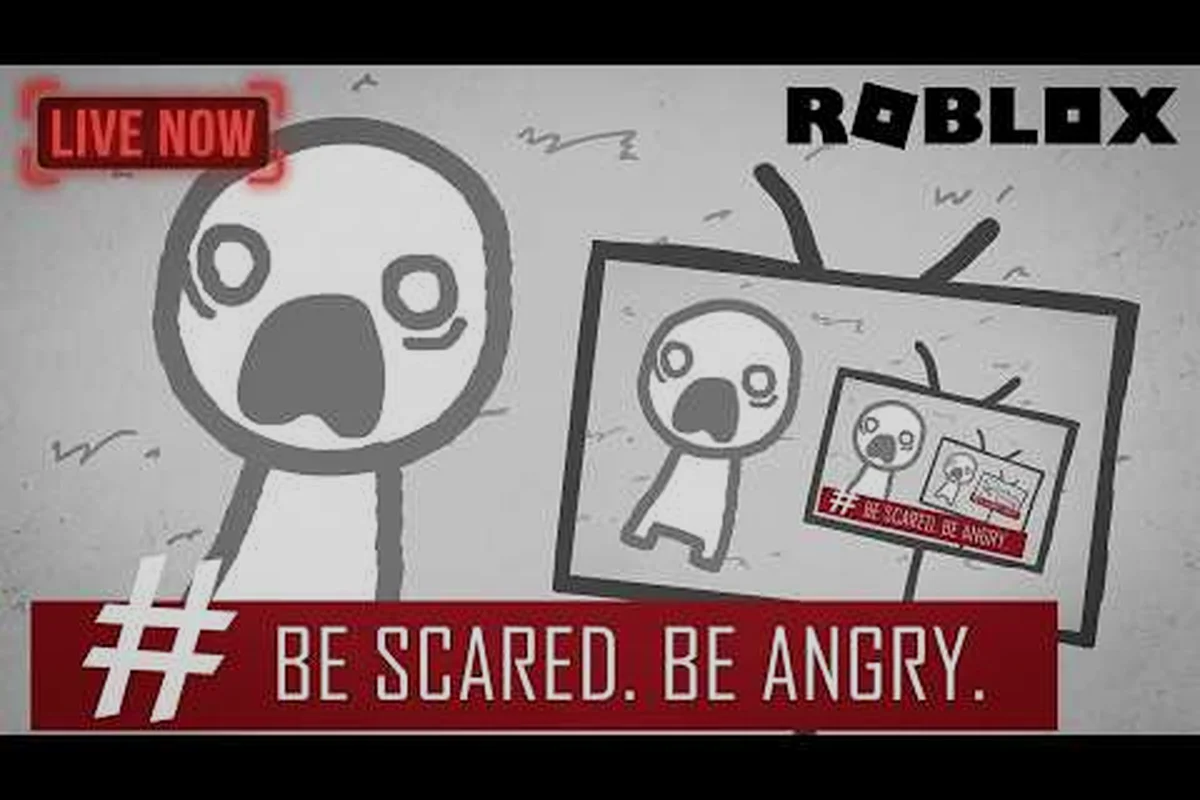
Say Cheese! Roblox for kids deserves a quick safety review because the published label is only one part of the decision. The game uses a satirical news scenario to explore public panic, so parents should combine that context with Roblox account, chat, and privacy controls.
The Published Content Label for Say Cheese! Roblox for Kids
The official Roblox listing identifies the experience as 📸 Say Cheese! [STORY], an Adventure and Story game created by Mechanical Boy LLC. Its published maturity label is Minimal, which is the clearest official signal available when assessing whether Say Cheese! Roblox for kids is appropriate. A label does not guarantee that every child will enjoy or understand the premise, however, so it should start the conversation rather than end it.
As of 2026-10-31, the public page also records 3,955,237 visits, 13,403 players, 49,747 favorites, and a vote total of 12,154 likes and 1,369 dislikes. These figures indicate substantial interest and roughly 90% positive feedback, but they do not provide a detailed age rating, a content breakdown, or a child-specific safety assessment. They are useful mainly as dated popularity context.
| Label facts | Value | Meaning for families |
|---|---|---|
| Published maturity | Minimal | The creator's current platform content label, not a guarantee of suitability for every child |
| Genre | Adventure / Story | Expect a narrative premise rather than a simple sandbox |
| Maximum players | 12 | Server capacity only; it does not establish that the game was designed for cooperative play |
| Release date | 2026-10-19 | The experience was new when this snapshot was recorded |
| Last update shown | 2026-10-31 | Public information can change after this date |
Parents looking for a plain-language explanation of the premise can use this family-oriented overview to separate the published label from the story's underlying themes. The distinction is important: Minimal describes the official classification, while the satire may still involve unsettling ideas that a mature child is better equipped to interpret.
What the Listing Establishes for Parents
The creator says the player works as a journalist hired by a powerful media organization and travels to a park with an instruction to create disorder and fear. The news audience is part of the premise, and the central choice is framed as destroying a peaceful society or changing its future toward hope. The opening also places the player on camera, establishing a media theme immediately.
The official page credits Nicky Case's We Become What We Behold as inspiration. That reference supports only a broad comparison involving how media can amplify collective emotion. It does not justify transferring the original game's structure, characters, or outcomes to Say Cheese!, so parents should treat any detailed claims about this experience as not documented unless they can be confirmed in game.
What the label cannot tell you
A maturity label cannot reveal whether a particular child will misunderstand fear, social conflict, satire, or morally uncomfortable choices. Nor does it predict how another player will behave in chat. Those questions require a combination of the official description, the family's knowledge of the child, Roblox's privacy settings, and a short observation of the actual experience.
This approach is especially helpful for adults evaluating Say Cheese! Roblox safe for kids questions. “Safe” can mean different things: low-rated content, limited personal data, controlled communication, and emotional readiness. The published label addresses only one part of that broader decision, so families should avoid treating it as the complete answer.
What the Satire Involves in Say Cheese! Roblox for Kids
The documented premise uses exaggerated journalism and mass attention to examine how fear can spread when media rewards dramatic scenes. Your character is instructed to disturb a peaceful setting while a huge audience watches. This is not a realistic depiction of how reporting works; it is a deliberately distorted media scenario intended to provoke thought about attention, public emotion, and personal responsibility.
For a child, the distinction between documented premise and undocumented content matters. The official page does not provide a scene-by-scene breakdown, a parental advisory, or a detailed account of what appears during play. If a child reacts strongly to threatening images, panic, shouting, or disturbing ideas, check in game before allowing repeated or independent sessions.
A media lesson rather than a news tutorial
The game may be especially useful for adults who want to introduce media literacy without turning the experience into a lecture. The journalist role creates a built-in question: What happens when attention becomes the goal, and when the audience rewards a spectacle rather than understanding the situation? Children can discuss whether the character is helping the public, exploiting it, or being manipulated.
Keep the discussion anchored to what children observe. If the player causes a scene, ask what the event does to other people and how framing changes what an audience believes. If a child interprets a scene differently, that difference is useful because it shows how media can produce varied reactions. For more context, the basic story and audience overview can help families separate confirmed information from interpretation.
Why the ending may sound alarming
The premise asks the player to choose between harming a peaceful society and changing the future toward hope. Adults may initially hear a destructive binary, which explains why the title can produce concern. The official listing gives no further context about how the choice unfolds, and the creator has not published a definitive list of outcomes or names.
Community videos (as of 2026-10-31) discuss multiple endings; the creator has not published a list, a count or any ending names, so treat them as unconfirmed. Families looking for a careful way to discuss possible outcomes without presenting rumor as fact can review the community-informed ending checklist, but they should return to in-game evidence for confirmation.
| Question a child may raise | Parent-friendly response | Evidence boundary |
|---|---|---|
| Is the journalist showing the real story? | Ask how the camera angle and audience reaction may shape the event. | The media theme is documented; specific techniques are not detailed officially |
| Is the peaceful society real? | Treat the setting as part of the satire rather than real-world reporting. | The park setting and peaceful society are stated on the official page |
| Must the player make the same choice each time? | Explain that repeated choices may differ only if the child confirms that in game. | Community reports (as of 2026-10-31) discuss multiple outcomes, but details remain unconfirmed |
| Can the game teach media literacy? | Yes, if adults frame it as a discussion about attention and public emotion. | The shared thematic influence is officially acknowledged |
The strongest family approach is to treat uncertainty honestly. Say, “The page tells us this part, but it does not tell us that part, so we will verify together.” That habit is more valuable than pretending a sparse description is complete.
Roblox Account and Chat Controls for Say Cheese! Roblox for Kids
The official maturity label cannot control account exposure or direct messages, so the practical next step is to review Roblox's family features before a child joins. Say Cheese! Roblox safe for kids decisions should include who can contact the account, what information appears on the profile, and whether purchases or group participation are available. These are platform-level controls, not features described by the game's creator.
Parents should use the signed-in account's privacy menu rather than relying on the child to remember every setting. On mobile, the interface is generally reached through the avatar or profile area, then the settings and privacy sections; the exact menu wording can vary by app version. On a browser or console, access may appear under the account or experience settings. Roblox periodically updates these menus, so check the current interface rather than relying on an old screenshot.
| Parental control | Where | Effect |
|---|---|---|
| Experience access | Account Privacy or Experience settings | Limits which experiences can be joined and when |
| Chat permission | Privacy settings | Controls whether the account can send or receive chat messages |
| Friend requests | Privacy settings | Restricts who can connect with the child |
| Profile visibility | Privacy settings | Controls what information other users can see |
| Account age setting | Account or privacy settings | Restricts social features according to the configured age |
| Parental approval for purchases | Family controls or platform purchase settings | Adds approval for selected spending |
Decide which social features are appropriate
For younger children, turning off chat and new friend requests reduces exposure to messages from people the family does not know. That is a platform-level safeguard rather than a claim that Say Cheese! contains harmful communication. The game itself documents a park setting and a story role; it does not promise that a session will remain socially neutral because another user can communicate through Roblox.
The search phrase Say Cheese! Roblox join also brings up a practical distinction: joining an experience and interacting with strangers are different decisions. Let the child enter a permitted experience while an adult supervises, and discuss whether they want any communication features enabled. This preserves the value of the story without treating every account on the platform as trustworthy.
Verify the source before joining
Roblox contains many similarly named experiences. A short guide to joining the correct Say Cheese! experience can help with the basic process, but the final check should happen on the official listing. Look for the developer identity, the title, the place ID 100453542816833, and the universe ID 10771871836 before allowing a child to enter.
Creators can also operate private instances, and a family may see invitations or links claiming access to a Say Cheese! Roblox private server. Roblox does not publicly guarantee that every similarly named invite is legitimate. The best approach is to open the invitation through Roblox, inspect the experience details, and avoid installing anything or entering credentials outside the normal platform flow.
| Join-related detail | What the public information says | Family action |
|---|---|---|
| Correct place ID | 100453542816833 | Match this before joining |
| Correct universe ID | 10771871836 | Use as an additional identity check |
| Developer | Mechanical Boy LLC | Confirm the creator listed on the official listing |
| Maximum players | 12 | Treat this as server capacity only |
| Private instances | The official page does not document a specific private-server arrangement | Inspect every invitation in the normal client |
Families who want to verify the people behind the experience can also check 2stefani1's official Roblox profile page. That profile belongs to the group's owner account, which is useful for confirming that a page claiming to be official is connected to the same creator identity.
Server Capacity and Joining Limits for Say Cheese! Roblox for Kids
The Say Cheese! Roblox max players figure is 12, but this number only describes the listed capacity of a server. It should not be presented as a promise of twelve active participants, a cooperative feature, or a specific form of social play. Some servers can have fewer occupants, and the published capacity does not explain how the narrative behaves when several people are present.
As of 2026-10-31, the official listing reports 13,403 people playing while also giving the capacity figure of 12. These numbers come from the same dated snapshot but serve different purposes: total concurrent activity is platform-wide, whereas capacity applies to one server. Comparing them directly would produce a misleading ratio.
| Capacity term | Meaning | What it does not establish |
|---|---|---|
| Maximum of 12 | The maximum server size listed for the experience | That every server is full |
| 13,403 playing | Total concurrent players recorded platform-wide as of 2026-10-31 | The number of people in the child's server |
| Visits | Total recorded visits as of 2026-10-31 | Unique player count or parental approval |
| Favorites | Public saves as of 2026-10-31 | Age suitability or active popularity |
Why the server count is not a safety rating
A larger or smaller server changes the social environment, not the official maturity label. Young children may be more comfortable with chat disabled and fewer people around, yet server size alone cannot determine whether a session feels stressful or friendly. The documented setup and the child's ability to communicate with a trusted adult remain more important than any headcount.
Parents should also avoid presenting the 12-person limit as evidence that the game is suitable for a family birthday activity unless the creator explicitly documents such use. The official page does not document private-session arrangements, reserved spaces, or group play procedures. Check in game when those questions arise, and do not invite other children without reviewing the account and communication settings first.
A practical joining routine
Use a repeatable routine whenever a new Roblox experience comes up. First, open the official listing rather than following a shortened link. Second, compare the title, developer, place ID, and universe ID. Third, review chat, friend, and experience permissions. Fourth, decide together whether adult supervision is needed and how long the session should last.
That routine also helps when answering the Say Cheese! Roblox join question. The issue is not simply whether the child can enter, but whether the account is prepared for the environment. A child who knows the developer name, understands the journalist premise, and has permission settings reviewed is less likely to enter through an unrelated look-alike page.
What Parents Should Watch For With Say Cheese! Roblox for Kids
The most important thing to watch is not a specific visual effect that adults may assume; it is the child's response to the documented satirical premise. The game asks someone to create chaos and panic for an audience, then frames two stark paths for society. Children may respond with excitement, confusion, discomfort, or an urge to morally judge the character. Each reaction can guide the next conversation.
Emotional reactions worth noticing
Watch for distress, repeated attempts to escape uncomfortable scenes, sudden refusal to play, or fixation on making others afraid. These observations are not proof that the game is unsafe. They are signals that an adult should discuss what happened, adjust the session, or stop if the child is overwhelmed. The official page does not document warning screens or scene-skip options, so those details must be checked in game.
| Observation | Possible interpretation | Suggested response |
|---|---|---|
| Laughter at panic | The child may understand the satire as exaggerated comedy | Ask what makes the scene funny and who benefits from it |
| Confusion about the choice | The moral framing may be too compressed | Explain the documented two-path premise in neutral language |
| Distress | The child may not distinguish satire from real events | Pause, describe the fictional framing, and reassess readiness |
| Repeated aggressive play | Repetition may be fun, or may reveal a concerning focus | Discuss whose perspective the camera shows and how the audience responds |
| Sudden silence or withdrawal | Chat, social pressure, or content may be causing discomfort | End the session and talk privately without blaming the child |
Social behavior and presentation
The experience places the player on camera in a documented fictional scenario, but that premise should not be used to excuse impersonation, aggressive behavior, or pressure toward other players. Establish a simple rule: fictional satire can be discussed, but real people do not become the target of the joke. That boundary is valuable whether or not chat is disabled, because behavior can also affect the child's comfort with the platform.
Keep the conversation tied to evidence
Parents can sound informed without pretending the official page contains more than it does. Use phrases such as “the official description says,” “I can see that,” and “we need to check in game.” Community reports (as of 2026-10-31) may help identify questions worth investigating, but they should not replace direct observation or official information. This distinction is central to a practical Say Cheese! Roblox parents guide because confidence comes from knowing where each fact came from.
A short session followed by a calm debrief usually works better than constant commentary. Let the child explain the story first, ask where the humor or tension came from, and only then offer an interpretation. That sequence gives the child ownership while ensuring that adults can respond to signs of distress or confusion.
A Short Pre-Play Conversation for Say Cheese! Roblox for Kids
A brief conversation before play can prevent most avoidable misunderstandings about the satirical premise. Tell your child that the game presents an exaggerated scenario about a journalist, cameras, public attention, and creating panic. Explain that the setting is fictional and that the purpose is to examine how media and crowds influence events, not to imitate real reporting.
This conversation also gives adults a natural place to review boundaries. You might ask whether the game should be played with chat on or off, whether someone should watch the first session, and what the child should do if a scene feels uncomfortable. Clear instructions are more useful than a long lecture, especially for younger children.
Conversation prompts that lead to useful answers
Use open questions tied to the documented premise. Ask what the child thinks the camera changes, why an audience wants to watch disorder, and whether the player is helping or harming the people in the park. These prompts encourage critical thinking without pretending the story has only one moral interpretation.
| Topic | Ask | Why |
|---|---|---|
| Satire | What does this exaggerated scene make funnier or more serious? | Helps a child distinguish fictional exaggeration from real events |
| Media framing | What might the camera leave out? | Introduces media literacy through the documented camera theme |
| Audience behavior | Why might many people watch a disturbing event? | Opens discussion about attention without blaming the child |
| Personal agency | When might the player have choices? | Encourages observation while keeping undocumented details open |
| Emotional limits | What would tell us it is time to pause? | Gives the child ownership over the session |
| Online boundaries | If another player is unkind, what should you do? | Connects fictional role-play to real online behavior |
A simple readiness checklist
Before the first session, confirm the correct experience and developer, review the account's privacy permissions, decide whether chat should be disabled, and set a reasonable time limit. Tell your child that they can stop without having to explain everything immediately. If the game prompts a purchase or an unusual permission request, do not approve it until you understand it inside the platform.
Families who want additional context can consult the player and community overview to understand who may be interested in the experience. That context should remain separate from the safety judgment: popularity is not proof that the content fits a particular child, and community behavior is not governed by the official maturity label.
A useful rule is to reassess after ten minutes, after any sudden reaction, and at the end of the first session. If the child understands the fictional framing and remains comfortable, the experience may be approachable. If confusion becomes distress, shorten the session and revisit the premise before trying again.
A Practical Parent Decision Framework
There is no honest way to promise that any online experience is completely safe for every child. The stronger answer combines published facts, technical controls, direct observation, and the family's boundaries. For Say Cheese! Roblox for kids, the current evidence supports a measured approach: the maturity label is Minimal, the premise is satirical rather than documentary, and the account environment still requires active supervision and configuration.
Use the framework below as a decision record rather than a one-time checklist. Record the date, update the settings after any platform change, and note which parts were confirmed by the official page versus observed in game. This prevents outdated assumptions from becoming part of your family policy.
| Decision layer | Evidence to use | Action before play |
|---|---|---|
| Content | Published Minimal label and documented satirical premise | Read the current official description together |
| Comfort | The child's reactions and ability to process fear or moral conflict | Begin with a short supervised session |
| Communication | Roblox chat, friend request, and visibility settings | Disable communication features that are not needed |
| Identity | Creator name, place ID, and universe ID | Confirm the official listing before joining |
| Time | Session length and planned break | Set a clear stopping point |
| Follow-up | Questions that arose during play | Debrief separately from other activities |
When to choose a quieter alternative
Consider waiting or choosing another experience if the child is very young, easily startled, sensitive to social pressure, or unable to distinguish satire from realistic events. The official label does not make a mature theme developmentally universal. Families can also revisit the decision after the creator publishes more detailed information, because public listings can change after this 2026-10-31 snapshot.
When the experience may fit
The game may be a reasonable discussion starter for a child who enjoys stories, understands exaggeration, and can talk about media influence. The Minimal label provides a favorable published starting point. With chat controlled, adult supervision available, and a short session planned, the premise can support a conversation about attention, responsibility, and public emotion without treating the child as a passive consumer.
Keep verification current
Do not rely on this article indefinitely as a safety certificate. Revisit the official listing for maturity changes, the creator's group, and Roblox's current privacy documentation. The Say Cheese! player and audience guide can help track community context, while the official listing remains the authority for the experience itself.
Frequently Asked Questions
Is Say Cheese! Roblox for kids based on a real news event?
No. The official description presents a fictional journalist assigned to create chaos in a park while a mass audience watches. Its satirical framing draws on Nicky Case's We Become What We Behold at the theme level, but the original game's details should not be treated as evidence about this experience.
Is Say Cheese! Roblox safe for kids based on its maturity label?
The published maturity label is Minimal, but that label is not a complete safety guarantee. Parents should also consider the satirical premise, the child's sensitivity to fear and moral conflict, chat exposure, privacy settings, and how the child responds during a supervised session.
What does the Say Cheese! Roblox max players number mean?
The listed maximum of 12 describes server capacity only. It does not confirm that every server is full, that a group of 12 will be together, or that the experience is specifically designed for cooperative play. Check the current server in game if group participation matters.
Can families use a Say Cheese! Roblox private server?
The official page does not document a specific private-server arrangement for families. If an invitation appears, open it through the normal Roblox client and verify the developer, place ID 100453542816833, and universe ID 10771871836. Do not bypass the client or enter credentials on an unfamiliar page.
How should a child join the correct Say Cheese! Roblox experience?
Open the official Roblox listing, confirm that it is created by Mechanical Boy LLC, and compare the place and universe IDs before joining. Before the first session, review chat, friend requests, and profile visibility, then use a short supervised session and discuss the fictional journalist premise afterward.