
The best Roblox story games are not always the ones with the biggest lists; they are the ones that make you feel responsible for what happens next. This guide explains how to compare Roblox story games 2026 by design intent, player choices, narrative clarity, and evidence you can verify on each page.
What the Story Tag Actually Means
Roblox’s Adventure / Story label is a broad discovery signal, not a quality guarantee. It can include games built around authored stories, branching decisions, short playable scenarios, or narrative framing. That makes the label useful for finding Roblox narrative games, but it does not tell you how long the experience lasts, how much agency the player receives, or whether the presentation supports the premise.
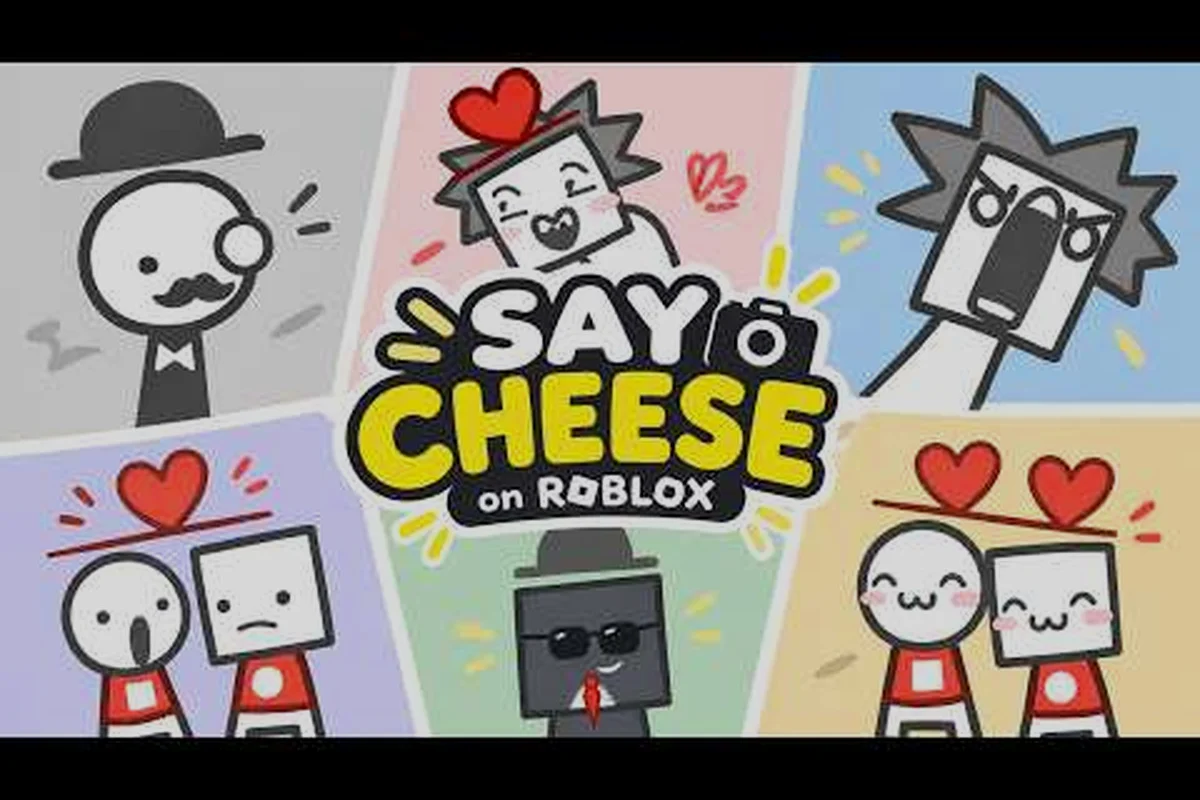
Say Cheese! illustrates why design intent matters. According to the official Say Cheese! experience page, the player is a journalist hired by Big Media and sent to a park to create chaos and panic for a nationwide news audience. Its central framing offers a destructive path that destabilizes peaceful society or a hopeful path that changes the audience’s fate. The camera theme is present from the start, although the exact sequence of events is not documented publicly.
| Public signal | What it suggests | What it does not prove |
|---|---|---|
| Adventure / Story label | The developer wants players to encounter a story-driven experience | That the story is deep, replayable, or technically polished |
| First-person camera language | Media and spectators may shape the premise | How cameras function during play |
| Explicit choice framing | Player decisions may influence the direction | How many outcomes exist or how often they change |
| Official creator description | The intended theme and starting situation | Every later event or conclusion |
A label-based search can therefore produce both Roblox choice games with meaningful agency and games whose narrative is mostly decorative. Before judging any title, separate its advertised purpose from the details you actually observe in play. If the public page does not explain a feature, mark it not documented and check in game instead of inferring a system from the genre tag.
Distinguishing premise, delivery, and player agency
Three separate layers often get collapsed into the idea of “story.” The premise is the situation presented to the player. Delivery is the way that situation is communicated through dialogue, scenery, camera work, editing, or other presentation. Agency is the extent to which player input can alter what happens.
A strong short experience does not need enormous scope. It needs coherence between these layers. For example, a premise about public attention becomes more convincing if the player can see how attention changes events, but the official Say Cheese! page does not document every step of that relationship. Community videos (as of 2026-10-31) discuss multiple endings; the creator has not published a list, a count or any ending names, so treat them as unconfirmed.
This separation prevents a common ranking error: treating a compelling premise as proof of strong execution. In Roblox narrative games, the hook may promise branching consequences, but dialogue continuity, readable staging, and meaningful player agency determine whether that promise survives play. A choice that changes only a line of dialogue is weaker than one that redirects an encounter, alters relationships, or unlocks a different ending; conversely, multiple endings add little value if every branch converges immediately. Evaluating premise, delivery, and agency separately makes comparisons across Roblox choice games more rigorous.
Criteria for a Good Short Story Game
A useful evaluation of the best Roblox story games should reward how deliberately an experience communicates, rather than how much trivia a listing page contains. Review the same criteria for each candidate so that popularity, atmosphere, and decision design do not get mixed together.
| Criterion | Signal | Weight |
|---|---|---|
| Clear premise | The page explains the player’s role and central conflict | 20% |
| Choice legibility | The player can tell when a meaningful decision is being offered | 20% |
| Consequence potential | The premise supports uncertainty without relying on surprise changes | 15% |
| Presentation fit | Visual, written, or audio elements reinforce the theme | 15% |
| Focused scope | The experience appears designed around a clear narrative objective | 15% |
| Replay value | The reasons to revisit are tied to choices or interpretation | 15% |
Clear premise is the first checkpoint because confusion can masquerade as depth. A player should understand the basic role, objective, and source of tension without needing an external guide. Say Cheese! provides this foundation through its journalist role, park setting, media premise, and conflict between spreading chaos and changing public sentiment.
Choice legibility is equally important. A decision only feels meaningful when the player understands what kind of pressure is being placed on them. The exact interface and timing used to present choices in Say Cheese! are not documented, so check in game and judge the clarity of the prompt rather than assuming a particular system.
Consequence potential should be evaluated through design logic. If the premise centers on collective emotion and media attention, then choices that amplify or redirect that emotion feel structurally appropriate. This does not prove the existence of any particular outcome; it identifies the experience that would make sense within the stated intent.
Weighting fit over raw length
Players looking for Roblox short story games often want a focused experience rather than a feature checklist. A shorter game can still score highly if its premise, choices, and presentation work together. Conversely, a long runtime cannot compensate for unclear intent or choices that appear visually important but lack consequence.
A useful comparison is between branching narrative games and short Roblox stories built around a single dramatic arc. Branching games can provide multiple endings through dialogue choices, relationship changes, or faction decisions, but more options do not automatically create deeper storytelling. A tightly focused short story may feel more complete if its character arc, setting, and final payoff remain coherent, making it easier to recommend for a concise session rather than a longer replay-oriented experience.
-
Confirm that the player’s role is easy to summarize in one sentence.
-
Identify the central tension without relying on fan interpretation.
-
Look for decisions that connect to the story’s stated theme.
-
Note whether the page gives a focused reason to begin.
-
Separate what the creator documents from what community reports suggest.
That sequence keeps the assessment fair because it weighs narrative fit against runtime instead of treating the longest Roblox story game as the strongest choice. For example, a branching narrative game with multiple endings may deserve a higher recommendation when replay value and meaningful decisions are priorities, while a tightly focused short story can win for players seeking a clear character arc, central tension, and a satisfying final payoff. The final recommendation should explain why a game suits a specific session, not claim that one title is universally superior.
Reading a Game Page Like a Reviewer
A Roblox game page is a primary source for the developer’s intended experience, but it is not a complete review. The description, official tags, engagement figures, update history, and visible creator information answer different questions. Learn to combine them without treating popularity as proof of narrative quality.
| Field | What it reveals | Caveat |
|---|---|---|
| Description | Intended role, setting, conflict, and creator framing | Promotional wording may omit important details |
| Genre tags | Broad discovery categories | “Story” covers several possible structures |
| Visits and favorites | Reach and interest signals | Not a direct measure of writing or agency |
| Likes and dislikes | A rough public reaction snapshot | Reasons for votes are not documented |
| Last update | Recent maintenance activity | Does not prove recent content changes |
| Creator group | Public ownership and publisher identity | Does not guarantee update frequency |
| Player reports | Community observations about play experience | Can change and must be dated |
As of 2026-10-31, Say Cheese! shows 3,955,237 visits, 13,403 players, 49,747 favorites, and 12,154 likes against 1,369 dislikes. Its listed server capacity is 12. These are snapshot values rather than permanent totals, and the vote ratio should not be read as a measured score for story quality. The page lists Adventure / Story and a Minimal maturity level, while the creator’s group shows 4,810 members.
These figures still help. Strong interest suggests the premise is reaching players, while the public vote balance gives a broad quality signal that can be combined with actual play. The max-player number only describes server capacity; it should not be used to claim a cooperative or multiplayer narrative design.
Turning a listing into a testable hypothesis
Write down one prediction before launching a game. For Say Cheese!, a reasonable hypothesis might be that camera-related presentation and audience reaction will shape the journalist’s decisions. That prediction comes from the official premise, not from outside lore. Then record what the game actually does during your first session, especially the sequence of prompt, camera angle, audience reaction, and resulting choice. For example, if a camera view changes the journalist’s available information and the crowd’s response alters the next prompt, log those links rather than simply labeling the event “story-driven.” Treat repeated outcomes as observations from your run; a player’s separate report can suggest what to test next, but it does not establish a fixed feature.
-
Does the opening establish the journalist role quickly?
-
Do prompts present choices as meaningful pressure rather than routine interaction?
-
Does the presentation reinforce the media theme?
-
Can you explain why a decision felt important without outside information?
-
Are there details the official page did not prepare you to notice?
Live page evidence should stay separate from community reports (as of 2026-10-31). If another player describes an event you did not encounter, that is useful context, not proof of a fixed feature. For questions about how choices relate to different outcomes, the decision-focused Say Cheese! guide provides a practical way to organize those observations without pretending the creator has published a complete branch map.
Where Rankings Go Wrong
Listings of the best Roblox story games often fail because they rank visibility rather than fit. A title with millions of visits may have a compelling hook, but that does not establish that it offers the strongest decisions, clearest storytelling, or best short-session value. Rankings also age quickly as new releases gain attention and older experiences receive updates.
The second problem is category confusion. Roblox choice games, Roblox decision games, Roblox narrative games, Roblox short story games, and Roblox games with multiple endings can overlap, yet they are not interchangeable. One may emphasize branching decisions, another atmosphere, another compact writing, and another replayability.
| Ranking method | Weakness | Better approach |
|---|---|---|
| Sort by visits | Popularity is mistaken for quality | Use reach only as context |
| Sort by favorites | Interest is mistaken for satisfaction | Compare votes and direct play experience |
| Count community videos | Video coverage is mistaken for official documentation | Verify claims against the creator page and in game |
| Group every Story title | The category becomes too broad | Define intended player need first |
| Promote one “best” experience | Preferences are presented as universal truth | Publish recommendations by use case |
| Repeat an old year-end list | New releases and updates are ignored | Date the evidence and recheck pages |
A further issue is selective proof. A ranking may quote one positive review, ignore mixed feedback, and never explain the test used to reach the final order. If the criteria are not visible, readers cannot challenge the result or apply it to their own preferences.
Replace a universal winner with fit-based recommendations
A defensible comparison groups titles by intent. One recommendation may serve players who want a clearly framed moral dilemma. Another may suit players who want a compact narrative they can finish in one sitting. A third may serve players who care most about replaying choices and comparing reactions.
The same game can lead one category while disappointing another, and that is not a contradiction. Say Cheese! appears especially aligned with a media-driven dilemma because its official framing centers on a journalist, a public audience, chaos, and hope. That is a design-fit claim, not a claim that it wins every measurable category.
Community reports (as of 2026-10-31) support the existence of third-party ending coverage, but the creator has not published a list, a count or any ending names. A responsible comparison must therefore avoid turning community uncertainty into a precise official feature list. It can say that replaying choices is part of the conversation while directing readers to verify the details themselves.
Building Your Own Shortlist
Your shortlist should become more accurate as you test candidates. Start with a fixed template, record evidence while it is fresh, and include both positive observations and unresolved questions. This is more useful than a decorative ranking because it shows why a game belongs on your list.
| Title | Fit | Next step |
|---|---|---|
| Say Cheese! | Media-driven moral dilemma with a clear journalist role | Play one session and record how choices are presented |
| Candidate B | Short-form premise that can be understood immediately | Compare first-session clarity with Candidate A |
| Candidate C | Decision-heavy experience with strong replay potential | Check in game which choices create meaningful divergence |
| Candidate D | Atmospheric narrative with a distinct visual or camera theme | Evaluate whether presentation supports the written premise |
| Candidate E | Compact story suited to a limited session | Compare pacing and ending clarity without judging length alone |
Begin with two or three candidates rather than a large list. Give each the same test: one initial session, one written prediction, and one review of the page afterward. If the title does not appear on your official page search in a useful way, search by the experience you want instead of relying only on category labels.
For Say Cheese!, record the following: note any on-screen title or label the game displays, identify whether the journalist’s assignment creates a specific deadline, and write down your prediction for the story’s central dilemma before playing. Then, during the session, log each choice, the characters affected, and any visible evidence of branching consequences. Afterward, compare your prediction with the outcome and note that community reports describe multiple endings, though the official page does not confirm a count or names (as of 2026-10-31); treat whether replaying earlier decisions changes more than the final scene as something to verify yourself.
-
The exact wording that establishes your role as a journalist.
-
Whether the audience and its emotional state are clearly communicated.
-
When a choice appears and what information is available before you act.
-
Whether the outcome feedback makes the decision feel consequential.
-
What you can confirm from the official page versus what community reports suggest.
A short checklist for tracking uncertain observations can also help with community-reported choice variations. Keep observations dated and avoid turning an anecdote into a universal claim. If the creator does not document a feature, check in game and report what you personally observed.
Scoring without pretending precision is permanent
Use a simple three-point scale for each criterion: weak, mixed, or strong. Add one sentence explaining every score. The score is less important than the reason, because reasons can be revisited when a game updates or your priorities change. You can also separate first-session quality from replay value. A game can communicate its premise immediately but not justify another run, or it can reveal more only after repeated choices. Those are different strengths. For players specifically considering replay-driven Roblox games with multiple endings, use the game’s documented premise and your recorded branch notes rather than assuming every dramatic outcome is canonical. Finally, keep your ranking date visible. The evidence for roblox story games 2026 is especially time-sensitive because visits, votes, favorites, update dates, and community interpretations change. A strong shortlist is a living document, not a claim frozen in time.
A Fair Method for Comparing Roblox Stories
The best Roblox story games become easier to identify when comparison begins with design intent rather than raw popularity. Say Cheese! stands out in this framework because its official framing connects a journalist role, public attention, chaos, hope, and explicit moral choices, while its reach provides useful context without proving narrative superiority.
Use clear premises, legible decisions, coherent presentation, focused scope, and replay reasons as your five foundation criteria. Verify claims on official pages, date community observations, and record what remains undocumented instead of filling gaps with assumptions. That method produces recommendations that remain useful when the Roblox story games 2026 landscape changes.
Frequently Asked Questions
How do I find the best Roblox story games without trusting an unverified ranking?
Start with a fixed rubric covering premise clarity, decision legibility, presentation, scope, and replay value. Evaluate every candidate under the same criteria, then treat visits, favorites, and votes as context rather than proof of quality. This produces a shortlist you can explain and update when pages change.
What makes a Roblox choice game different from a Roblox decision game?
The terms can be used interchangeably in ordinary conversation, so neither label guarantees a particular structure. In practice, “choice game” may emphasize selecting among options, while “decision game” may describe the broader consequences of acting. Verify the actual interaction and feedback by checking in game rather than assuming from the label.
Does Say Cheese! have officially documented multiple endings?
Community videos (as of 2026-10-31) discuss multiple endings; the creator has not published a list, a count or any ending names, so treat them as unconfirmed. The official page confirms a choice between destroying peaceful society or changing fate to bring hope, but it does not provide a complete outcome guide.
Is Say Cheese! a good Roblox narrative game for a short session?
Its official premise is focused: you play a journalist sent to a park to spread chaos before a mass audience, with a conflict between destruction and hope. That makes it a strong candidate for players seeking a compact moral scenario, although the exact runtime and how choices unfold are not documented, so check in game before setting a firm expectation.
Should I compare Roblox short story games by popularity or by player feedback?
Use both for different purposes. Popularity indicates reach and current interest, while public votes and firsthand play can reveal reception, but neither automatically measures narrative quality. The most reliable shortlist combines dated engagement data with a consistent test of premise, agency, presentation, and focus.