
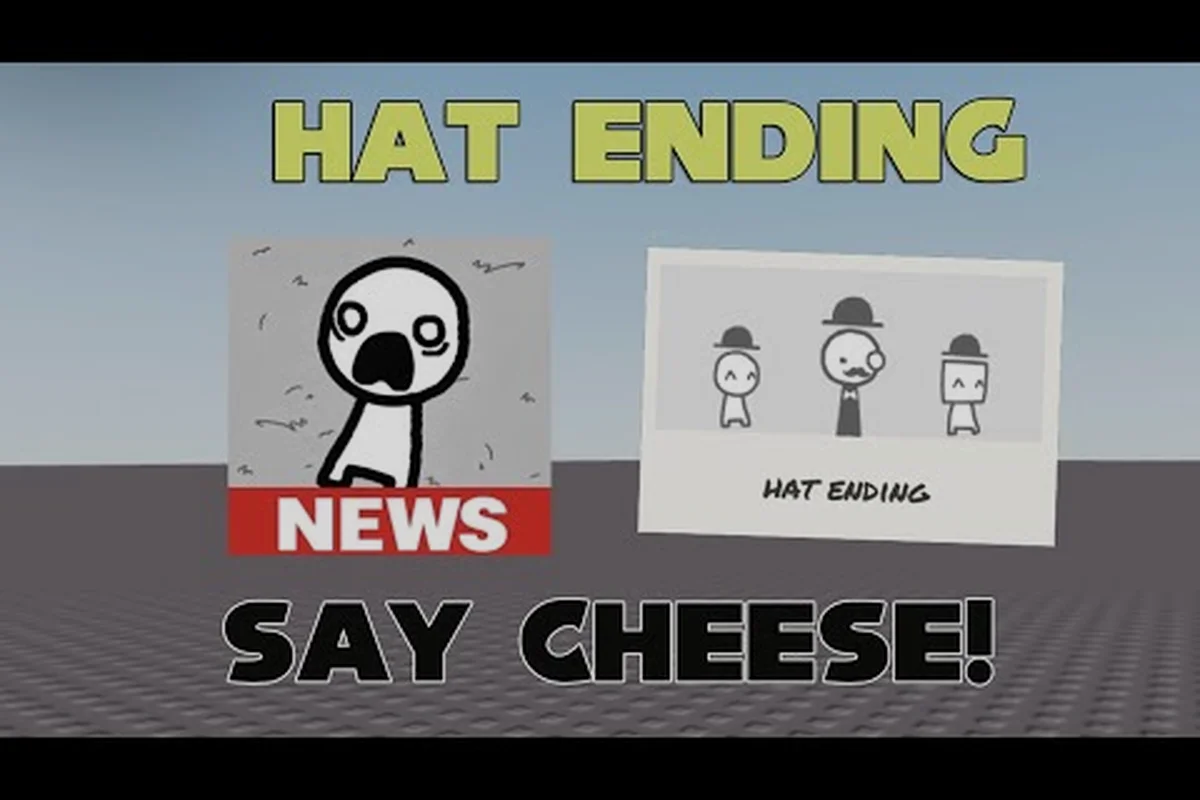
Say Cheese Roblox endings depend on choices that the official page leaves intentionally broad, so tracking outcomes is more reliable than trusting an unsupported count. A practical ending log should record each visible decision, what appeared on screen afterward, and the final scene separately; for example, label one route “good,” “bad,” or “secret” only after confirming its activation and final cutscene. This approach also exposes whether an ending requires a particular cheese choice, a completed task, or a hidden interaction, while separating verified outcomes from community guesses and duplicate uploads.
What the Creator Has Published About Say Cheese Roblox Endings
The creator has published very little about Say Cheese Roblox endings. The official Say Cheese! on the official Roblox platform describes a journalist hired by Big Media, sent into a park to create disorder while a huge audience follows the news. It also presents a binary framing between destroying a peaceful society and changing fate to bring hope, then leaves the final responsibility with the player.
That description establishes the story’s theme and the choice between two broad outcomes. It does not establish how many outcomes exist, what each one is called, or how a player reaches a particular result. Published framing means the creator has directly described the premise; it does not mean the creator has documented a complete results list.
| Claim type | Example | How to treat it |
|---|---|---|
| Officially documented | The player is a journalist sent to spread chaos in a park | Treat as confirmed story framing |
| Community reports (as of 2026-10-31) | Players describe multiple outcomes after different decisions | Treat as leads to test, not official labels |
| Not documented | A complete catalog or total | Do not present a number as fact |
The Confirmed Story Setup
The official page identifies the experience as an Adventure/Story title released on October 19, 2026. Its central premise is media-driven social tension: the player works for an organization called Big Media, behaves in public, and operates while enormous numbers of people watch. The title and opening line reinforce the camera concept, although the page does not provide a detailed procedure for using that theme.
Big Media framing is the most reliable official anchor. It tells you what role the player occupies and why public reactions matter, but it does not supply missing route details. Any player who claims to know every branch from the store text alone is filling a gap with assumptions.
The official page was also updated on October 31, 2026, the same date used for this research snapshot. That makes its current wording the best available creator source, but a recent update does not automatically mean every outcome has been disclosed. As of 2026-10-31, the page listed approximately 3,955,237 visits, 13,403 players, 49,747 favorites, and 12,154 likes against 1,369 dislikes, with about 90% positive ratings.
What the Official Page Does Not Establish
Several popular search phrases promise more certainty than the public source supports. Questions about the total number of possible results, a definitive favorite, or named positive and negative conclusions all require labels the creator has not published. The right approach is to separate what the page establishes from what player experience may reveal.
| Search topic | Official status | Responsible answer |
|---|---|---|
| The number of available outcomes | Not documented | Do not state a total |
| Names attached to outcomes | Not documented | Use player-created working labels |
| The exact decision that changes a result | Not documented | Record the choice directly in game |
| Whether a result is considered better or worse | Not documented | Compare the story result you observe |
| A creator-approved complete list | Not documented | Check in game for current changes |
Community videos available by October 31, 2026 show players labeling several Say Cheese Roblox outcomes with different working names, but those labels may reflect different choices, dialogue routes, or result screens. Because the creator has published no list, total, or canonical ending names, treat every claimed good ending or bad ending as unconfirmed; verify the in-game decision and resulting story scene yourself before presenting it as a distinct ending.
Why Community Say Cheese Roblox All Endings Lists Disagree
Community lists often disagree because they use different units for comparison. One player may count every different final scene, another may count only broad moral outcomes, and a third may treat reordered conversations as separate results. Without a shared definition, every list can look complete while measuring something different.
Outcome unit is the first problem. A changed final image, a changed closing narration, and a different choice made several scenes earlier may represent one broad branch or three separate outcomes, depending on the recording. This is why a definitive list requires more precise evidence than a screenshot.
| Source type | What it can establish | Main limitation |
|---|---|---|
| Creator’s game page | Premise and broad structural choice | No outcome catalog |
| Personal playthrough | The exact result reached in one run | Cannot prove global completeness |
| Community video | Multiple community-reported outcomes | Terminology may differ by creator |
| Player discussion | Observations and theories | May mix facts with interpretation |
A second problem comes from version timing. The game released on October 19 and received an update on October 31, 2026. A recording made before an update may show different results from a later run. Without a visible version date, even a carefully described run has limited value.
Three Reasons a Total Becomes Unstable
The first source of instability is different grouping rules. Players often collapse similar outcomes, separate similar ones, or count every noticeable variation. The second is incomplete verification, because seeing a new result does not prove that another result is impossible. The third is outdated footage, especially when the creator changes wording, presentation, or decision consequences after publication.
These are practical reasons to avoid a confident number. Community reports (as of 2026-10-31) indicate interest in multiple outcomes, but agreement between two videos does not establish a creator-approved total. Treat agreement as a sign that a result is repeatable, not as proof that the catalog is finished.
How to Compare Community Claims Fairly
Start by recording what appears after the final decision, rather than beginning with the creator’s preferred category. Ask whether the reported difference changes the final scene, the surrounding choices, the framing of the press event, or merely the route taken to reach it. Keep the narrow observation separate from your interpretation.
A useful comparison has three layers, and each one answers a different question about a reported Say Cheese! ending. First, check whether the claimed finale changes the ending scene itself or only a preceding choice; second, verify whether a replay with the same remembered decisions reaches that conclusion; third, compare the evidence across all endings without treating a community label as an official good-versus-bad classification. This distinction matters because a route variation can resemble a distinct ending while still leading to the same final outcome. That method preserves useful community evidence without presenting speculation as official information. If you are still building familiarity with the experience, the Say Cheese! beginner guide can establish the basic story perspective before you begin comparing results.
-
Direct observation: What the player selected, what changed, and what the run displayed at the conclusion.
-
Replay result: Whether a second run with the same remembered decisions reaches the same conclusion.
-
Interpretation: Whether the result seems hopeful, destructive, or somewhere between those labels.
One Confirmed Structural Fact: The Creator Hands Over the Outcome
The strongest confirmed fact is not a named result; it is the creator’s decision to hand over the outcome. The official framing contrasts destroying a peaceful society with changing fate to bring hope, making the audience’s reaction to the player’s behavior the conceptual center of the story.
Creator-controlled framing gives the player a clear responsibility without documenting the route. The official page does not document the number of branches, their names, or the exact choices required. That means a practical ending guide should help you observe decisions and outcomes rather than invent a condition list.
| Structural element | Officially documented implication | Verification approach |
|---|---|---|
| Player role | The player acts as a journalist for Big Media | Note choices from the journalist perspective |
| Setting | The action takes place in a park | Record context and visible reactions |
| Public influence | A vast audience follows the developing news event | Compare reactions across runs |
| Broad choice | Destroying society and bringing hope frame the decision | Save the final outcome verbatim |
| Responsibility | The creator leaves the choice to the player | Keep the log player-centered |
A Decision Journal for Repeatable Runs
Begin a fresh run and keep a simple journal available. At each meaningful choice, write the option’s visible wording, the option you selected, and what changed immediately afterward. Do not simplify the record to “left” or “right,” because later readers may not know which option that label refers to.
For a cleaner process, use the personal ending log template before replaying. The important point is to capture evidence during the run, because memory often merges similar choices after several attempts. A timestamp, screenshot description, and exact selection can make a later comparison much stronger.
| Run record | Exact choice text | Immediate response | Final result | Confirmed on replay |
|---|---|---|---|---|
| Run 1 | Write the visible option | Record the change | Save the conclusion | Yes or no |
| Run 2 | Write the visible option | Compare with Run 1 | Save the conclusion | Yes or no |
| Run 3 | Write the visible option | Check for consistency | Save the conclusion | Yes or no |
This method supports the Say Cheese Roblox ending guide without pretending to know undocumented steps. It also gives you evidence when comparing a possible good ending, bad ending, or best ending with what the creator actually established. For example, if two runs use different wording for the same decision, record both labels instead of merging them into one route; that preserves the distinction between the Say Cheese Roblox all endings list and a confirmed ending checklist. When an ending remains uncertain, mark it as unconfirmed rather than treating a similar final scene as proof.
How to Build a Personal Say Cheese Roblox Ending Log
A personal log solves the biggest practical problem in this topic: there is no confirmed count to use as a checklist. It also prevents a familiar result from being mistaken for the only result. The goal is not to force a specific answer to “Say Cheese Roblox how many endings” but to create a record you can reproduce and expand.
Evidence-first logging means every row should identify a concrete result rather than a guessed total. Separate what you saw, what you chose, and how you classified it. If a detail is uncertain, mark it as unknown rather than filling the gap with community terminology.
A Repeatable Logging Workflow
Start before making the first important selection. Prepare a sheet with one row per run and columns for the run number, choices, outcome, replay status, and notes. Keep working labels separate from the creator’s wording because no ending names are documented.
| Column | What to record | Why |
|---|---|---|
| Run number | A simple chronological label | Prevents duplicate observations from being counted twice |
| Decision sequence | The visible choice and order | Makes later replay attempts more precise |
| Result evidence | The exact final scene or text | Separates observation from interpretation |
| Working label | Your own descriptive name | Prevents community labels from becoming false authority |
| Replay status | Untested, matched, or changed | Shows whether a result appears repeatable |
| Source note | Video, notes, or personal observation | Makes later verification possible |
Verification Steps for Every New Result
After finishing a run, save the final wording or a clear description before searching for someone else’s label. Write the choices in order, then replay from the beginning while changing only one uncertain element at a time. If the result fails to repeat, keep it as a possible variation rather than promoting it to a confirmed branch. If you want a broader framework for isolating changes, the ending-condition analysis guide offers a useful companion structure. Neither resource can turn undocumented creator information into a fact, but both can help separate a repeatable result from an assumption.
| Step | Action | Result |
|---|---|---|
| 1 | Record the final scene or wording exactly | Creates primary evidence |
| 2 | List the decisions in sequence | Produces a compact replay recipe |
| 3 | Repeat the same decisions | Tests repeatability |
| 4 | Change one decision at a time | Isolates possible influence |
| 5 | Compare community terminology | Adds context without replacing evidence |
| 6 | Keep unsupported details marked unknown | Prevents assumptions from becoming facts |
Keeping the Log Useful After the First Run
A good log should remain readable months later. Use the creator’s exact terms when recording the premise, your own descriptive terms for results, and a separate note for community labels. This prevents three different things—the story’s framing, your interpretation, and another player’s terminology—from being merged into one unsupported claim.
Update the log whenever the game changes. The release and update dates establish a timeline, while your recording date establishes whether a result came from the current version. If the creator later publishes a list, compare it with your observations and preserve the original log rather than rewriting history.
Telling a True Branch From a Variation
A true branch in this context is a repeatable result reached through a distinct decision path, not simply a different-looking final moment. Since the creator has not documented branch structure, players must define their terms before comparing results. True branch should mean that changing a decision reproduces the change, while a variation may differ in wording, presentation, or a small detail without establishing a larger structural difference.
The true-ending analysis page can serve as a comparison resource, but it should not be treated as an official catalog. Its role is to organize questions: what changed, what triggered the change, and whether another player reached the same result under the same conditions.
| Observation | Stronger interpretation | Weaker interpretation |
|---|---|---|
| Same result across several replays | Repeatable outcome | A single lucky run |
| Different final wording with similar structure | Possible variation | A separate major branch |
| Major change caused by one decision | Likely meaningful influence | Proof that only one choice matters |
| Community label with no visible evidence | Community terminology | Confirmed category |
Test the Decision That Appears to Matter
When a result changes, alter only the decision closest to the suspected influence point first. Then work backward one step at a time. This method is slower than copying a list, but it is more dependable when no official condition chart exists and it can reveal whether a decision matters throughout the run or only near the conclusion.
For example, if two runs differ in their final presentation, compare their earlier decisions before assigning them separate categories. If the decision sequence is identical but one run differs, then the difference may reflect an in-game variable, a missed interaction, or another undocumented detail; check in game rather than guessing.
Judge Results by Their Story Outcome
A result’s quality is subjective unless the creator defines a hierarchy. The official description suggests two broad directions—destruction or hope—but it does not label either one as a canonical good ending or bad ending. If you rank the best ending, explain the criterion: hopeful outcome, greater personal agency, a more coherent conclusion, or simply your preferred interpretation.
| Ranking criterion | What it emphasizes | Important limitation |
|---|---|---|
| Narrative coherence | Whether the conclusion fits prior decisions | Interpretation remains personal |
| Hope versus destruction | Alignment with the official broad framing | The creator does not rank the two |
| Consequence visibility | How clearly the ending displays its effect | Presentation can vary |
| Replay value | Interest in discovering another result | Does not prove branching depth |
Community reports (as of 2026-10-31) use labels such as good, bad, true, or best in conversation, but the creator has not documented those labels. The safest answer to “Say Cheese Roblox good ending” is therefore observational: explain what the result shows and why you regard it positively, without presenting that opinion as an official designation.
Practical Answers for Players Tracking Results
A careful ending-tracking system answers practical questions that a speculative catalog cannot, especially when Say Cheese Roblox endings are reported from different playthroughs rather than one verified route. For example, a “good ending” claim should include the final scene or exact wording, the remembered decision sequence, and whether a replay reached the same result; otherwise, it may be a variant, a missed trigger, or an unconfirmed ending. This evidence-first approach prevents “all endings” lists from treating community guesses as confirmed Say Cheese Roblox ending counts and lets readers evaluate any good ending, bad ending, or best ending without overstating what the creator has established.
Run log provides evidence of what happened, when it happened, and whether it repeated. Outcome comparison explains how you distinguish a meaningful result from a presentation variation. Source labeling keeps official information, community reports (as of 2026-10-31), and your own observations separate. Together, these practices make the Say Cheese Roblox all endings discussion more accurate even when no complete list is available.
| Goal | Best evidence | Best next action |
|---|---|---|
| Record a result | Final wording or clear scene description | Save it before viewing community labels |
| Test repeatability | Identical remembered decision sequence | Replay and mark the result matched or changed |
| Compare two outcomes | Point of visible divergence | Change one decision at a time |
| Estimate total | No official basis | Do not claim a total |
| Describe a favorite result | Your criteria plus observed outcome | Call it a personal best |
A Simple End-of-Run Review
Spend five minutes reviewing each run before starting another. Read your choice sequence aloud, confirm that you recorded the final result accurately, and mark whether the run has been retested. If a detail is unclear, add a note that it needs verification. This routine takes less time than searching through multiple videos and produces a cleaner record for future comparisons.
The practical takeaway is straightforward: the creator has confirmed the premise and the player’s responsibility for the outcome, but not a complete result catalog. Record choices, preserve the ending you reach, test it again, and label community terminology as community evidence. That approach keeps every Say Cheese Roblox endings claim grounded in something a reader can verify.
Frequently Asked Questions
How many endings are in Say Cheese Roblox?
No confirmed total is available from the creator as of 2026-10-31. Community videos (as of 2026-10-31) discuss multiple endings; the creator has not published a list, a count or any ending names, so treat them as unconfirmed. The most reliable answer is the number of distinct outcomes you can personally document and reproduce.
What is the best ending in Say Cheese Roblox?
The official page does not designate a favorite result, so the best ending is a personal judgment. Evaluate the conclusion you reached, explain which narrative qualities you value, and verify that the outcome repeats before describing it as a distinct branch rather than a variation.
Is there a confirmed good ending or bad ending?
The creator has not published those labels. The page frames the central choice around destroying a peaceful society or changing fate to bring hope, but it does not name either result. Call a conclusion good or bad only as your interpretation, while recording the actual outcome for verification.
How can I track all endings I find in Say Cheese Roblox?
Use one log row per run, record the visible choices in order, save the final wording or scene description, and mark whether a replay produces the same result. Keep creator wording, community labels, and your own working names in separate columns so assumptions do not become mistaken for confirmed information.